


Representing Monsanto
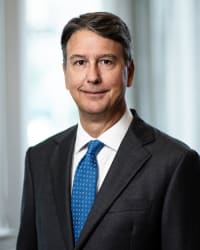
Adam Peck isn't afraid of controversial cases
Published in 2009 Alabama Super Lawyers magazine
By Nancy Henderson on May 4, 2009
Adam Peck was a young partner at Birmingham’s Lightfoot, Franklin & White in 1993 when he defended Monsanto, the biotechnology and former chemical giant, for the first time. The St. Louis, Mo., company was facing PCB contamination claims from property owners near Lake Logan Martin. “That was a pretty manageable situation,” Peck, now 48, recalls. “I mean, it was a big complicated class action lawsuit, but it was fairly contained.”
Not so with Abernathy v. Monsanto, which ultimately prompted the largest and longest-running trial in Alabama history. In the complaint, filed in 1996, 3,600 plaintiffs claimed that the Monsanto plant in Anniston knowingly contaminated its community with polychlorinated biphenyls (PCBs) used for decades to prevent explosions in electrical equipment.
Peck argued that Monsanto and its corporate successor, Solutia, tried to protect the public and the environment by spending millions of dollars on sampling and cleanup efforts. Furthermore, the company, which had halted PCB production in 1971—eight years before a national ban took effect—asserted that it didn’t notify area residents sooner because, back then, no one knew how the chemicals spread. “Obviously, when we started finding PCBs around the plant, we realized we were going to have a more significant problem,” says Peck, whose practice focuses on corporate litigation, products liability and environmental torts.
Defending a large corporation in a case that draws public ire and the scrutiny of 60 Minutes was tough. The show noted the discovery of internal documents indicating that Monsanto had concealed information from area residents. But the challenges didn’t stop there.
For one thing, Abernathy v. Monsanto was not a class action lawsuit but 3,600 separate suits rolled into one. “In early 2002, we tried 17 individual cases combined together in front of a jury,” says Peck. “And we received liability but not damage verdicts for those 17 people.” After that, Monsanto and the plaintiffs agreed to enter into a summary format. “That was the roughest part of the case, because literally we would go in front of the same jury every day, who had already basically found against us and have to argue the same points over and over again. … It was hard. We had to pump each other up every day because you’re literally going in front of a group of folks who have told you that they disagree with you and you’re trying to nicely ask them to reconsider. We did that hundreds of times.”
Complicating matters was the fact that, in each of the Abernathy cases that were tried, the plaintiffs claimed detectable levels of PCBs on their properties or in their bodies, but not actual illness or injury. (The EPA now classifies PCBs as probable carcinogens, to which Peck says epidemiological studies are inconclusive.) “We were stuck with basically trying PCBs in the abstract,” he says.
In February 2002, six weeks after the trial began, the jury found Monsanto guilty on all six counts: negligence, wantonness, trespass, nuisance, suppression and outrage. The last verdict, which generally covers conduct “so outrageous in character and extreme in degree as to go beyond all possible bounds of decency so as to be regarded as atrocious and utterly intolerable in civilized society,” was particularly disappointing to Peck. “Outrage is one of the counts that we felt should have been taken out of the case because it [requires] a very high burden of proof and it’s an aspect of the law that is reserved for specific outrageous situations.”
Still, Peck says, the damages—in September 2003, the parties agreed to settle the case for $300 million in cash—could have been much greater. (In the same settlement, the defendants also agreed to pay $300 million to 17,000 plaintiffs in another case, Tolbert v. Monsanto.) “That was far less than any demand we’d ever had pre-trial. So in that sense it was a good result.”
Despite the loss, Peck won both of the product liability cases he tried alongside Abernathy v. Monsanto. One lawsuit involved an older woman who fell off a ladder while cleaning her gutters. The second was filed by a worker who fell while jumping onto a rolling warehouse ladder. Both plaintiffs claimed structural defects; the juries disagreed. “That kind of reaffirmed me as a lawyer at a time when I was having a pretty tough time in the courtroom with the Monsanto case,” he says.
“[Abernathy] happened at the midpoint of my career, which I consider fortunate. It’s made me not afraid to try the most difficult cases.”
Search attorney feature articles
Featured lawyers
Helpful links
Other featured articles

Chad McGowan’s forays in planes and a brewery

A short history of the family firm in Sandusky that has existed for nearly 100 years

Steve Ray looks back on his time in the service
Find top lawyers with confidence
The Super Lawyers patented selection process is peer influenced and research driven, selecting the top 5% of attorneys to the Super Lawyers lists each year. We know lawyers and make it easy to connect with them.
Find a lawyer near you