


Lady Liberty
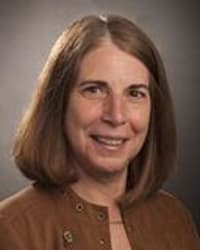
Margaret Catillaz has the world knocking at her door
Published in 2009 Upstate New York Super Lawyers magazine
By Courtney Mault on August 21, 2009
For Margaret Catillaz, the real accomplishments of a case come well after it has closed.
“You can’t always see the change you’ve made, sometimes not for years,” she says. “There are concentric circles of impact you see over the years. For people who have gotten a chance and [to see] what they’ve done with that chance—it’s a glorious process to watch that unfold.”
When Catillaz was a first-year lawyer, she divided her time between litigation and immigration. At first it was a single immigration case, passed on by a co-worker. “Then one case grew to two and two became three and so on. I became intrigued by the combination of skills needed, the human-ness, the legal challenges,” Catillaz says. After 10 years, she decided to focus solely on immigration law. As a result, she meets people from all over the world and finds herself delving into questions of the human condition. “I started trying to understand what makes us tick,” she says. “The social science of it—why do we move [from one place to another]?”
For the most part, her clients come into the country via large institutions such as universities, hospitals and multinational corporations. She secures work as well as visas for students. “It’s a hard life still, but a hard life with a prospect,” Catillaz says of the experience new immigrants have.
One client “wanted to be in America more than anything,” as Catillaz puts it. She helped find him a job right out of college. “He’s the chief financial person now.” Another was an immigrant with innovative plans. “He had ideas to manufacture in a more earth-friendly way, even before this green movement.” Now he’s working at a university, researching new ways to make industry easier on the environment.
Sometimes Catillaz will get a new client by way of a concerned school counselor. “Something wasn’t right with this girl,” she says of one. Her father had been deported and her stepmother was not providing a safe home. Catillaz was able to secure a green card for her. “She’s now a manager at a large company,” she says. “She has brought her family over from Africa and is now able to take care of them.”
Catillaz also takes on pro bono cases, including clients who have fled to the U.S. fearing for their lives. One of her former clients left his country with only the clothes on his back. “He and his wife were educated here in Rochester,” Catillaz says. The couple moved back to their native Nicaragua, where their home was invaded and the wife murdered during the Nicaraguan political crisis in 1981. The husband fled back to Rochester and eventually found his way to Catillaz’s office. It was cold when he arrived, and he was walking around without proper outerwear. A stranger ended up buying him a new winter coat and Catillaz won him the right to stay in the U.S. “I realized there was this community of quiet philanthropy,” she says. “This is how you discover your country. The fundamental kindness … [The person] who can barely care for their own family is the one who takes someone in.
“It’s difficult to come and to stay,” Catillaz says. “The system is not generous.” Nor is the system stable. No matter how much she studies regulation and policy, no matter how many years she devotes to a case, when there is a sudden shift in policy, Catillaz has to start all over. “The system feels cracked at that point,” she says.
“Deportation is now called removal,” Catillaz says. “Like taking lint from a jacket rather than throwing someone out the door.”
Adding more difficulty to the process, the Bush administration’s last attorney general, Michael Mukasey, changed the standards of inadequate counsel. Immigrants who had been advised to plead guily to minor crimes, unaware of how it would affect their immigration status, could not have those cases reopened—even if their representation was inadequate. Unable to reopen the case, the client could be deported with no chance of returning. (Recently, the Obama administration reversed the policy.)
“It’s frustrating, but the outcomes are so delicious. Someone has been given the gift of opportunity,” she says. “They make the most of it. Even the people who come through the hole in the fence.”
Search attorney feature articles
Featured lawyers
Helpful links
Other featured articles

Chad McGowan’s forays in planes and a brewery

Attorneys share their memories of the heart-wrenching and historic Detroit bankruptcy case

Sheri Oluyemi brings a broad perspective to her employment practice
Find top lawyers with confidence
The Super Lawyers patented selection process is peer influenced and research driven, selecting the top 5% of attorneys to the Super Lawyers lists each year. We know lawyers and make it easy to connect with them.
Find a lawyer near you