


Once a Marine, Always a Marine
Steve Ray looks back on his time in the service
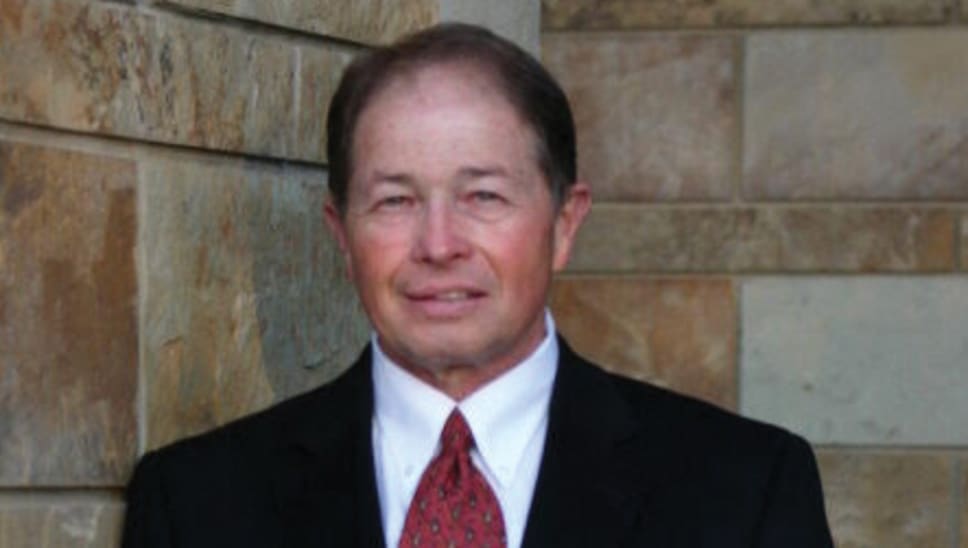
Published in 2026 Colorado Super Lawyers magazine
By Diane Stopyra on March 19, 2026
Oorah! For members of the United States Marine Corps, it’s a spirited battle cry—and a reminder to keep going, even when circumstances seem bleak. And, as personal injury lawyer and retired Marine Corps Col. Steve Ray knows, the mantra works both in and out of uniform.
“I had a recent case where a young man got really hurt due to gross mistakes by some very powerful people,” Ray says. “I’d get up at 3 a.m. after three or four hours of sleep, because preparing for trial was so intense. Somewhere in the recesses of my mind—or maybe even consciously—I’m sure it was there: Oorah. You do what you’ve got to do.”
In the early 1970s, Ray, who was already commissioned into the Army and had deferred active duty to attend law school at the University of Tulsa, accepted a commission into the Marines after graduation. Never mind the cynicism that marked public opinion of American military service during the Vietnam era—this was a matter of family legacy.
During World War II, Ray’s father, Billy G. Ray, had served as commanding pilot of a B-24 bomber. On his 50th mission—his final before returning home—his plane was shot down and his spinal cord nearly severed. He became a German prisoner of war for nine months, including a stint in solitary confinement. But despite the threat of torture, Ray’s father never divulged classified information about his missions, and after the war, he recovered and returned to the U.S. to build a family. Years later, Ray’s older brother, Greg, pursued a career with the Air Force before dying at 18.
“No one had to poke or instruct us to join the military,” Ray says. “It was just something we were automatically going to do. It felt natural.”

Ray attended basic training in Quantico, Virginia, and he completed simulated patrols in which enlisted service members acted as the enemy and opened fire. Ray was instructed not to duck, not to shield his head, but to shoot back—swiftly and decisively—with his own M16. (Fire suppressors prevented injury.) This training would prove useful over the course of a decades-long legal career.
“They really encouraged aggression,” Ray says. “And that is important in the courtroom, where you need to keep your cool, control your emotions and deploy another type of counterattack.”
Following infantry training, Ray, still in his mid-20s, became a judge advocate in El Toro, California, handling court martial proceedings, sometimes prosecuting but mostly defending fellow Marines in trouble. When A Few Good Men came out years later, it rang true.
“The film was spot-on,” he says. “I never had to put Jack Nicholson or anyone like him on the stand, but I did have to deal with Marines like that in getting deals for my clients.”
In one headline-making case, Ray defended one of the “Camp Pendleton 14,” Black Marines abused by Ku Klux Klan members who infiltrated the service in the mid-’70s. The young men retaliated with an attack of their own, but got the room wrong and accidentally ambushed unrelated Marines. The situation drew national attention to racism in military service—Ray remembers Geraldo Rivera contacting him about the case, although he wouldn’t discuss details with him. In the end, he helped achieve a favorable result for his client.
“From a very young age,” he says, “we were getting real trial experience, learning the presence necessary for addressing a court.”
Coming off of active duty at age 28, Ray transitioned to private practice in Fort Collins and eventually opened his own personal injury office there. He earned a reputation for tackling difficult cases. Consider the young client who was working construction when a six-foot panel of corrugated steel fell on his head from a six-story height, resulting in a permanent neck injury. It took seven years for Ray to get an appropriate settlement, but, as he says, “I don’t give up easily.”
While taking on civilian suits, Ray remained in the Reserve, becoming a military judge and traveling to Southern California’s Camp Pendleton and North Carolina’s Camp Lejeune to preside over cases. Eventually, he transitioned to Space Command in Colorado Springs, where he served as legal advisor to a special, highly classified unit. These positions wound up preparing Ray for perhaps the highest pressure role of his life: After 9/11, he was recalled to active duty.
In the chaos following the attack, U.S. Secretary of Defense Donald Rumsfeld temporarily moved to Strategic Command, a heavily fortified control center in Nebraska that oversees the nation’s nuclear forces. While there, Rumsfeld pushed the command to expand counterterrorism operations and, in this high-stakes environment, Ray was called in to establish the Marine Corps’ presence in the counterterrorism mission. He relied on a skill he’d honed as a lawyer: attention to detail.
“I’ve always managed a heavy caseload,” he said. “You need solid organizational methods for that, and I applied those same techniques.”
In 2005, Ray retired from the military. He’s still bringing that oorah mentality to every case, but there’s a different sound he enjoys hearing just as much.
“The sigh of relief you hear from a client—military or civilian—after a win,” Ray says. “That’s the most fulfilling part.”
Search attorney feature articles
Featured lawyers
Helpful links
Other featured articles

Considerations when entering a software contract

Aaron Abelleira is in construction law by day, punk rock by night

Johnny Kornegay transformed his funeral parlor past to an estate administration present
Find top lawyers with confidence
The Super Lawyers patented selection process is peer influenced and research driven, selecting the top 5% of attorneys to the Super Lawyers lists each year. We know lawyers and make it easy to connect with them.
Find a lawyer near you