


‘Human Damages’
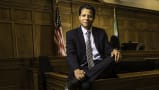
How Cody Dishon won a $59.7 million verdict for a paralyzed friend—from a Jefferson County jury

Published in 2025 Texas Super Lawyers magazine
By Harris Meyer on September 15, 2025
It was Cody Dishon’s first medical malpractice trial, and it was a tough one.
In August 2019, at age 33, Kiet “Ricky” Tuan Do, a personal friend of Dishon’s, suffered paralysis in most of his body due to a rare blood clot on his cervical spine that essentially suffocated his spinal cord. Dishon, representing his friend, claims that a delay in treatment of nearly 30 hours allegedly due to negligence by Baptist Hospital in Beaumont and several physicians caused Do’s catastrophic outcome.
Baptist claimed that two outside physicians were responsible, alleging that one failed to spot the rare medical complication on a CT scan and the other failed to promptly refer him for an MRI.
Despite the hospital’s defenses, Dishon persuaded a Jefferson County District Court jury to find that Baptist was 90% liable for the delay that contributed to Do’s injury.
Last September, after a two-week trial, the jury awarded Do $59.7 million, including $14.6 million in lost wages and future medical costs, and $32.8 million for pain and suffering. (Two independent physicians were each found 5% responsible but not assessed damages.)
Baptist filed a motion for the court to
set aside the judgment notwithstanding the jury verdict, and the judge ordered them into mediation. In May, the case settled for a confidential amount. Otherwise, the non-economic damages might have been reduced to Texas’ statutory cap of $250,000.
Dishon says he won at trial because he highlighted conflicts in testimony between Baptist Hospital’s expert witnesses, and also between the attending physician and the nurse who took care of Do in the hospital.
“Even though it was my first med-mal case, my experience trying other kinds of injury cases taught me the key is telling a consistent story,” Dishon says.
Just after midnight on Aug. 13, 2019, Do, an oil refinery worker, experienced sudden severe shoulder, neck and back pain and went to a freestanding outpatient clinic, where the emergency physician ordered a CT scan of his cervical spine and brain. While there, Do’s legs collapsed.
The CT images were sent to a radiologist in Hawaii, who interpreted the results as normal. The emergency physician diagnosed Do with rhabdomyolysis, in which damaged muscle breaks down and the contents enter the bloodstream. He was transferred to Baptist at about 3:30 a.m.
Six hours later, he was transferred from the emergency room to a floor nurse, and then an internal medicine physician. At 1:42 p.m., the doctor examined Do. The MRI was not performed until around 7 that evening. The doctor testified he had verbally ordered the test to be done quickly on a high-priority basis, while the nurse on duty testified he ordered it on a routine basis, Dishon says.
Around midnight, the MRI came back showing a blood clot on Do’s cervical spine. Several hours later, he was flown to St. Luke’s Hospital in Houston, where surgery was performed—nearly 30 hours after he first sought care. By then, he was paralyzed, Dishon says.
A turning point in the trial came when Dishon cross-examined Baptist’s two medical experts whom the hospital had called to accuse the radiologist of misreading the CT scan before Do came to the hospital. One expert said it was a blatant error, while the other said the clot was hard to detect without an MRI, Dishon says, adding, “You lose credibility when one expert says one thing and the other expert says another thing.
“The big thing for the jury was that the doctors and the hospital were blaming each other. When they’re not on the same page, mistakes happen. And the person paying for those mistakes was my client.”
Some of the best lawyers don’t specialize in medical malpractice anymore, and clients don’t get justice.
Dishon, a partner at 16-attorney Ferguson Law Firm who handles personal injury and workplace safety cases, normally doesn’t take medical negligence cases. Texas’ $250,000 cap on noneconomic damages often makes med mal financially nonviable for attorneys. For example, Dishon says, the expert and filing expenses came to $294,000 in this case.
He made an exception since Do was a personal friend and a young man earning good money who could show large lifetime wage losses as well as high health care costs from the injury. If he had been retired or a stay-at-home dad, Dishon laments, he wouldn’t have had enough potential economic damages to hire the needed medical experts.
That’s why Dishon says that, even though the case has settled, he will fight to change Texas’ 2003 law capping pain and suffering damages—which he calls “human damages”—on state and federal constitutional grounds. He argues that the cap denies medical malpractice victims their rights to access to the courts and trial by jury.
“Some of the best lawyers don’t specialize in medical malpractice anymore, and clients don’t get justice,” Dishon says. “This case could help other malpractice victims who don’t have attorneys working aggressively for them. Ricky wants to make sure they also have a voice in the courtroom.”
Search attorney feature articles
Featured lawyers

Helpful links
Other featured articles

Attorneys who have practiced for 20 years on the past, present and future of law
How Felix Gavi Luna and company landed the state’s biggest jury award

Kate Hedgeman carved her nonprofit niche after seeing the need firsthand
Find top lawyers with confidence
The Super Lawyers patented selection process is peer influenced and research driven, selecting the top 5% of attorneys to the Super Lawyers lists each year. We know lawyers and make it easy to connect with them.
Find a lawyer near you