


Published in 2026 Washington Super Lawyers magazine
By Steve Knopper on July 30, 2026
In the early 1980s, Mary Anne Vance wrote an article for the state Bar newsletter in an issue dedicated to women who practiced law in the first half of the 20th century. While in court one day, she recalls, “The judge called out and said, ‘Where do you get off writing a whole issue about women? I have red hair. Are you going to do next month’s issue on people with red hair?’ He said this in open court.” Vance, now an estate planning and probate attorney at Reed Longyear Corwin Burnett & Calogero, prevailed nevertheless.
Six female attorneys who broke into law in the 1970s recently sat down with us to talk about the experience. Most were motivated to go into law by concerns for social justice and the direction of the country. All are still concerned about that direction.
Why Law?

Mary Anne Vance, Reed Longyear Corwin Burnett & Calogero; Estate Planning & Probate; Northwestern University School of Law, 1974: It was the end of the ’60s and I wanted to try to bring some equality and justice to people who were disenfranchised from the system.
Catherine W. Smith, Smith Goodfriend; Appellate; University of Washington School of Law, 1979: To Kill a Mockingbird. The book, not the movie.
Shannon Sperry, Lasher; Real Estate; University of Utah College of Law, 1975: I debated in high school and I was very successful, and I wanted to debate for the rest of my life.
Sandra Lynn Perkins, Sandra Lynn Perkins PLLC; Estate Planning & Probate; University of Wisconsin Law School, 1979: My grandfather and father were lawyers. I worked in my father’s law office during the summers and sometimes on weekends when I was in high school. He was a lawyer in a small town, Boothbay Harbor, Maine, and he did every kind of law you can imagine. He was the county attorney for 25 years. Then he became an industrial accident commissioner and he drove around the state and presided over workers’ compensation hearings. He did all that in addition to his own busy law practice.

Sheryl J. Willert, Williams Kastner; Employment & Labor; Vanderbilt University Law School, 1978: My oldest sister, four years older than me, was dating a young man who got called off to Vietnam, and she was heartbroken. My civics teacher was assigning us to write papers about things we thought were important about the government. I decided I was going to write about the illegality of the Vietnam War. She got me a contact with the librarian at the University of South Carolina School of Law, who walked me through research for that subject. I became fascinated with the law.
Law School
Vance: There were 20 of us in the class, and it was the first time they ever had more than like three women. The major problem was there were only two toilets in the law school, for the secretaries of the male professors. Everyone was like, “Well, what are we supposed to do?” They were just completely unprepared for that.
Smith: Maybe a quarter of our class was women.
Sperry: Only 10% of my law school class were women. But I was on law review. Our editor-in-chief was a woman, so there were two women on law review.
Perkins: My law school class was over one-third women, and women were overrepresented at the top of the class.
Early Jobs

Linda Ebberson, Lasher; Family Law; University of Washington School of Law, 1976: I was determined to get a job in a private law firm in my first year of law school, so I went to one of the tallest buildings in Seattle and started handing out my résumé at the top and worked my way down. At one floor, the receptionist said, “If you wait, I have someone that will speak to you.” That summer, I worked at the firm doing legal research and memoranda. It’s the same firm I’m with today.
Sperry: Looking for a job was more difficult for a woman back in ’75. Many law firms would hire one woman and that was it. They had their quotas. I was lucky some small law firm said, “Oh my gosh, look at this résumé.” They hired me and I’ve been there for 50 years.
Vance: Everyone would address my male client, who was not a lawyer, as the attorney. Then you’d have to say things like, “No, I’m the attorney. No, I’m really the attorney.”
Ebberson: I’m the average woman’s height, 5-foot-5, and I had men who would tower over me in court in front of the judge. So I always made a point of wearing stilettos to even things out—because their point in hovering over me was to intimidate me. That didn’t work. But the stilettos hurt your feet.
Perkins: When we were interviewing for jobs, we were getting good offers. If the law firms wanted the top students, they were hiring women.
Sperry: I raised four children while working full time. I had help. I was able to afford good daycares and good nannies. Back then, you didn’t get maternity leave. You got your vacation time, but that was it.
Above: Vance shows off a bill, while Willert shows off her dress circa 1980.
Your Mentor
Vance: Chris Young. She was probably 10 years ahead of me and took the time in the ’70s to talk with me about how she managed her home life and practice and really tried to quit work at 5 p.m.
Sperry: It would be my male partners, who have for the most part supported me and treated me as an equal and given me equal opportunities to flourish in this firm.
Willert: My father, Charles James Johnson Jr., was my idol. My dad was the first African-American high school principal in the state of South Carolina to have an earned Ph.D. He would always tell me, “No, young lady, you have it wrong, I was the first principal in the state of South Carolina to have an earned Ph.D.” My mother, Anne McKellar Johnson, was also one of my role models. She put up with me, and I am one of seven children, so you can imagine.
Smith: Malcolm Edwards [the firm’s founding partner]. He was a great, thoughtful person, and he advocated for me throughout my career.

Perkins: My primary mentor at my first law firm was Tom Featherston. He worked with me one-on-one and taught me so much about how to draft wills and other estate planning documents. He would give me an assignment, I would go and do the work, he would mark it up, and he would sit with me and say, “Yeah, this would work, but here’s a better way to say it.”
Ebberson: I give the founders of my firm full credit for hiring me and mentoring me. I tried cases as second chair with [founder] Earl Lasher, which more than launched my career and my recognition among the judges.
Memorable Cases
Vance: I made an argument on behalf of a widow. The stepsons were trying to deprive her of what we thought was her lawful inheritance. My client had a disabled adult child. She had married a guy and she raised three stepkids as her own. When her husband died, he had a home-done will giving the house to the sons. I argued before the Washington Court of Appeals. It was the first time in history that there were enough women in the judicial system that I pulled an all-female panel. I saw it as a good omen, and we were successful on that case.
Willert: One that sticks out in my mind is a case involving a girl who was 11. She was deaf. As she matured, she was able to communicate that she had been molested by her grandfather. The grandfather was convicted of sexual assault and sent to prison. I still have a mug she gave me that says, with the finger and the thumb and the fist, the way you sign “friend.”
Ebberson: We handled one of the largest divorce cases in the country at the time. We were part of a team working on that case for the wife at the end of a 25-year marriage. The husband had come into the marriage with family wealth and leveraged that into what was ultimately a publicly traded company, so he was arguing that much of the estate was traceable to his separate property and shouldn’t be shared with his estranged wife. The case settled before trial. … She was very pleased with the outcome. That was in the mid-’90s, and was a tipping point to narrow my focus and limit my practice to high-net-worth family law clients.

Sperry: I’ve probably been involved in the purchase and development of more golf courses than any other attorney in Seattle. The Newcastle property was a construction garbage dump, built over abandoned coal mines. Washington passed a law—and we were the first one to use it—it says you can take over contaminated property, and if you did things a certain way, you didn’t take on any liability for the contamination. It took many years of permitting and working on the environmental issues, and then my client built two golf courses on that property, sometime in the early ’90s.

Smith: I was able to argue a case in the U.S. Supreme Court in 1999, Troxel v. Granville [which affirms the rights of parents to care for their children]. I represented the parents, who were resisting [significant] court-ordered visitation by grandparents. These cases can be brought against single moms who have no money, and they’re sometimes used to provide visitation or custodial rights to another parent.
Vance: I got hired once by this big, burly construction worker to do a job. This was 1979. He said, “Lady, I figure it this way. Any lady who made it through law school has got to be one tough broad. And that’s what I figure I need. So I passed up all the guy recommendations people gave me and I found you in the phone book.” He was right, too! He was a roofer and he had injured his back, and I did a hearing before the board of industrial insurance appeals. I got him lifetime benefits.
How Has the Legal Landscape Changed?
Vance: I didn’t feel any change until women started flooding into the law system, the mid-’80s. It started getting better in courtroom settings.
Sperry: Eventually, the firm became known as Lasher Holzapfel Sperry & Ebberson. So there were two women’s names in the firm. We were the only firm of any size that had any women’s names for many, many years.
Perkins: They didn’t have computers back then, at least not on people’s desks. A fax would come in on that horrible thermal paper that you could barely read, and it fades into the light, and they would race up to your office and breathlessly present you with a fax and say, “Do you have a response?” We used to write out our timesheets by hand. There were word-processing employees, staff people who would enter the information. They would call you if they couldn’t read your handwriting.
Ebberson: Immediately before I started practice, the state of Washington adopted no-fault divorce. That made a big difference in how family law was practiced. Now, AI is very challenging, because we have to maintain our attorney-client confidences. It’s a very treacherous sea to navigate. So those are the bookends.
Vance: The amount of women in the profession is gratifying to see. Women are 50% of the population, and they should be 50% of the attorneys. For a long time, we weren’t getting any women partners, and now there are more. We’ve got a long way to go.
Above: When Smith graduated from UW law school in 1979, Perkins in the 1970s, and Ebberson and fiancé a few years before she got her J.D.
Are You Concerned About the Rule of Law?
Ebberson: Deeply. The [Trump] administration is running roughshod over the rule of law and ignoring court orders right and left—and weaponizing the Department of Justice, causing our judiciary to be on the receiving end of death threats. For the sake of my children and my grandchildren, I’m horrified.
Vance: I am extremely concerned about the state of the judiciary and the executive powers and the legislative powers and the infringement of poor people’s rights [and] the disfranchised. If you’re a person of color, if you haven’t gone to college, the world is stacked against you. The law was always the best protection that people had, and what’s happening is a tragedy.
Sperry: I’m sick about it. I am concerned that there is a large number of people in this country that would like to have a fascist form of government. That’s what I think we are moving toward. You’re welcome to use the word fascism.

Willert: Our lower courts, our federal courts and, of course, the state courts in Washington are doing an incredible job adhering not only to the Constitution of the United States [but] the constitution of the state. Our attorney general is doing a fabulous job trying to ensure the people of the state of Washington are protected from the missteps that are made by others around the country. But there are fewer students being taught that we are a society of people who should be helping people, as opposed to going our own way. That’s very concerning to me.
Smith: The first problem is the politicization of the judiciary. We’re now at a point where you think you can predict what somebody’s going to do based on who appointed them. And this administration continues to do things that most people would think are not authorized or are unwise, so we have to engage in all this litigation.
Perkins: I’m going to send you my New Year’s card from last year, on which my husband and I are wearing “Rule of Law” T-shirts. I never would have imagined that I would see what is happening in the U.S. today. The rule of law is the foundation of our entire democracy, and if we lose that, we lose our democracy. We lose our entire country.

Search attorney feature articles
Featured lawyers


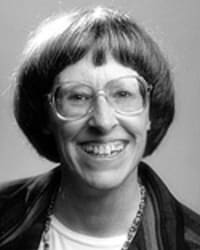

Mary Anne Vance
Top rated Estate Planning & Probate lawyer Reed Longyear Corwin Burnett & Calogero, PLLC Seattle, WA
Helpful links
Other featured articles

In mediation and martial arts, Amy Mayer packs a punch

Jason Baruch brings a cool head to the hot lights

Dealing with a nursing home or care facility during the COVID-19 era
Find top lawyers with confidence
The Super Lawyers patented selection process is peer influenced and research driven, selecting the top 5% of attorneys to the Super Lawyers lists each year. We know lawyers and make it easy to connect with them.
Find a lawyer near you