


Three Days in September
Kimberley Best Robidoux on working employment-side immigration law in the first year of the second Trump administration
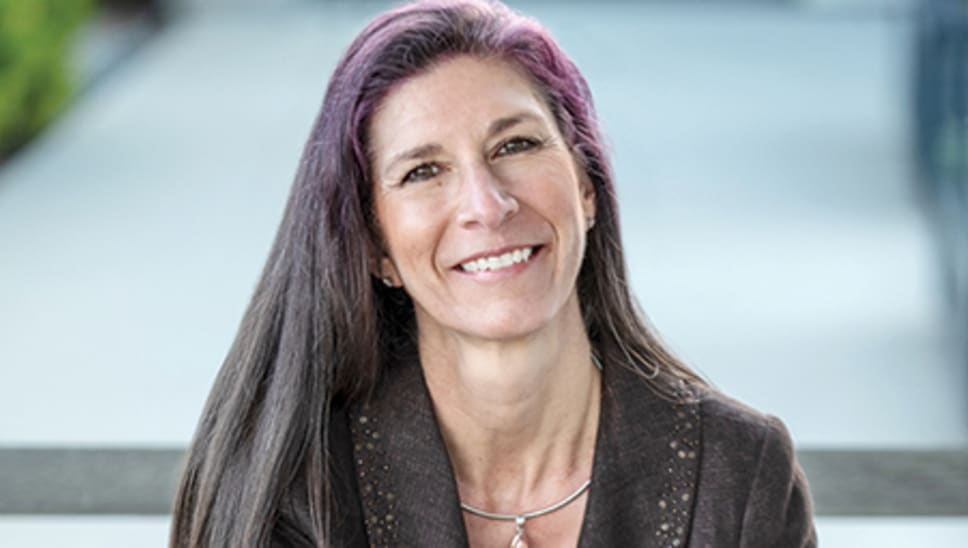
Published in 2026 San Diego Super Lawyers magazine
By Erik Lundegaard on March 16, 2026
On Friday, September 19, 2025, around 4 p.m., Kimberley Best Robidoux, an immigration attorney at Wolfsdorf Rosenthal in San Diego, was at a networking event on a boat when all hell broke loose.
In a group Slack chat, a firm partner posted that President Trump had issued a proclamation that a $100,000 fee would be attached to H-1B petitions for those entering the United States. It was set to start on September 21—less than 36 hours away.
“We knew we had to take action immediately,” Robidoux says.
In a flurry of posts, the team attempted to divine the meaning of the proclamation for a client alert; then, throughout that weekend, they contacted corporate employers and pulled their list of H-1B workers to determine if anybody was traveling outside the U.S. so they could be brought back by midnight Saturday. “Which meant pulling a couple people back from vacation,” she says. “Which was a horrible thing, right? To say to someone, ‘Sorry, but you need to come back immediately, because, based on this, you might not be able to come back without there being a $100,000 fee.’”
Some government guidance was finally offered on Saturday afternoon. Apparently the fee would only apply to new applicants and would “not impact the ability of any current visa holder to travel to/from the U.S.” But by then many of those visa holders were already on planes back to the U.S. Lawyers couldn’t be certain how official the new guidance was anyway. “At that point, you’re like: This is something coming from the press secretary on social media. Is this really the official government stance?” Robidoux says.
“It was just a massive disruption on so many levels,” she adds. “I don’t know any immigration attorney that has corporate clients that was not working all day, every day, that entire weekend.”
It’s not the way the federal government normally rolls out new policy, Robidoux says. “Something of this magnitude would require regulatory change, and that would be through posting it in the Federal Register with a notice and comment period. Most times, there is an effective date that is at least 30 or 60 days in the future so it gives you time to pivot as needed. … The September 19th proclamation is being litigated right now, because it violates many different regulatory requirements.”

2025 had already been a tumultuous year in immigration law. Robidoux ticks off the following changes: travel bans, the termination of temporary protected status for certain countries, the reinstatement of interviews for all visa applicants, and the termination of humanitarian parole programs. “There have been new fees at the port of entry for I-94 arrival documents,” she says. “There’s been an increase in fees for visa applications across the board. There’s just something new that’s coming out almost on a weekly basis that we’re having to stop, review, figure out what this means, determine strategy.”
At press time, Robidoux’s clients hadn’t experienced ICE raids at their workplaces. She has, however, assisted clients with preparing protocol in case they’re raided. On her end, it would involve reviewing warrants, communicating with the company rep, and coordinating with criminal defense attorneys.
Robidoux calls herself one of the “geeks” of immigration law because of her work on compliance matters, particularly I-9 (an employment form anyone hired after Nov. 6, 1986 is required to fill out) and E-Verify (a late 1990s initiative, required of federal contractors and in certain states, and an extra step in authentication of work authorization).
“Compliance is seen as kind of dull and mundane,” says Robidoux, who is in her second year as national chair of the Verification and Documentation Committee at the American Immigration Lawyers Association. “I’m very detail-oriented—there’s a lot of intricacies with the different regulations and statutes that come into play—and not many people really focus on I-9 and E-Verify.”
But attorneys with expertise in I-9 and E-Verify are increasingly relied upon by employers. “As these new policies and issues are coming up that affect employers and how they have to complete the I-9 form, or how they have to reverify the work authorization for individuals, we’re the ones that are digesting that information,” Robidoux says.
Born and raised in Troy, New York, Robidoux graduated from Cornell University with a degree in industrial and labor relations. “I wanted to do something in the employment area,” she says, “whether that was with unions, human resources, or maybe employment law.”
For a time she worked for a nonprofit, Institute for a Drug-Free Workplace, then got a job as a paralegal at a firm in Washington, D.C., to see if law would be a good fit. “This new group of attorneys had just joined the firm, a labor, employment, and immigration group, and they primarily represented entities within the hospitality industry,” she says. That interested her. Once she got her J.D., the dot-com boom was in full swing, and a significant number of people were immigrating to the U.S. “So I became focused on employment-based immigration,” she says.
Now her practice area is full of constantly moving targets. As an example, she mentions Venezuela’s temporary protected status. At the start of the year there were two such designations: one from 2021, one from 2023. Earlier this year, DHS terminated both. Litigation ensued. “There’s something that happens from the government, and then there’s a twist on it,” she says. “That’s been a back and forth with employers: ‘Yes, we can employ them.’ ‘No, we can’t.’ ‘Yes, they have work authorization.’ ‘No, they don’t.’”
While the $100,000 fee for H-1B visas is being litigated, its impact is already being felt. Autumn, Robidoux says, is typically the time when employers select university graduates with STEM degrees for the H-1B cap lottery in March. But for many employers, such planning is on pause. “They had to determine, ‘Well, are we going to pay the $100,000? Or are we going to be eligible for this national interest exception in order to get a waiver?’” Robidoux says. “Some employers actually stopped moving forward with the interview process for some really good candidates because they were unsure if that $100,000 fee was going to apply.”
Other consequences are more immediate. Since February, she says, there has been an increase in I-9 audits issued by ICE. Generally, in such audits, if someone’s work authorization doesn’t match what’s in the government database, the government “will issue the employer what’s called a Notice of Suspect Documents, and say to the employer, ‘Hey, this person is not coming up in our system. You need to reach out to them for valid work authorization,’” Robidoux says.
When one of her clients was issued an I-9 audit, however, that wasn’t the process. Instead, she says, “Six to eight weeks after they had turned everything over, they had a couple of their employees detained on their way to work. … The fact that a couple of employees, employed by the same employer in the same location, were detained within a week of each other, in my mind says, ‘OK, in certain situations, they’re using the I-9s to review the individuals and then go pick them up.’”
Overall, Robidoux estimates that there were more than 500 changes to immigration policy last year, “many of which were announced right before they went into effect or were discovered after they had already gone into effect,” she says. “Such changes brought panic, concern, stress and uncertainty for not only foreign nationals but for U.S. citizens as well.”
She anticipates more of the same this year.
Search attorney feature articles
Featured lawyers

Helpful links
Other featured articles

The district issues its first gun permits, but the process is under fire

Painless tips for finding the right personal injury attorney

Wanting a reputation separate from his prominent father’s, Mark C. Joye made it happen
Find top lawyers with confidence
The Super Lawyers patented selection process is peer influenced and research driven, selecting the top 5% of attorneys to the Super Lawyers lists each year. We know lawyers and make it easy to connect with them.
Find a lawyer near you