


Published in 2026 Mountain States Super Lawyers magazine
By Nancy Henderson on September 7, 2026
Changes in law, in technology, even civility in the profession, can be challenging. But being forced to stay on your toes comes with its own rewards.
“It’s fun for me because every day, I’m like, ‘I don’t know what’s going to happen today. Let’s just see what happens,’” says Brian Steadman, an estate planning attorney at Solomon Dwiggins Freer & Steadman in Las Vegas. “It took me a few years of being regularly wrong to finally figure out that I’ve just got to be ready for whatever.”
For our 20th anniversary, we spoke with five lawyers who’ve been around all 20 years about their paths to law and the future of it.
The Call of Law
Brian Steadman, Solomon Dwiggins Freer & Steadman; Estate Planning & Probate, Business & Corporate; Las Vegas, Nevada: I was traveling in the Philippines prior to college and I met somebody that was practicing there. It seemed very lucrative, and he had a very comfortable lifestyle. He was able to experience a lot of cool things. When I got back, I found a law firm and decided to start out as a runner, the lowest on the totem pole, then receptionist, and then I was promoted to paralegal—all while getting my undergraduate degree.
Katherine Huso, Matovich, Keller & Huso; Insurance Coverage, Liability Defense; Billings, Montana: I did work at a workers’ comp firm—not what I do now—but that sort of got the wheels turning. My parents were both teachers. After I graduated from college, I did AmeriCorps for a year because I was undecided about what to do next. What was attractive to me about a law degree was that it’s so broad and flexible, and there was a very broad variety of career paths that I could do.
Joshua Baron, SB Legal; Criminal Defense; Lehi, Utah: There was no math on the LSAT. But also, I wanted to help people and underdogs.
Amanda Esch, Davis & Cannon; Employment & Labor, Civil Litigation; Sheridan, Wyoming: My family owns a working cattle ranch and dude ranch, the oldest in the nation, outside of Sheridan. Watching the various issues they dealt with, from working with the U.S. Forest Service to employment issues related to regulatory framework with local government agencies and property tax issues, gave me a front-row seat to all different areas of business. It inspired me to want to learn more and use my problem-solving mindset to help people.
Dean Bennett, Holland & Hart; Employment Litigation, General Litigation; Boise, Idaho: Throughout my undergraduate degree, my goal was to play professional baseball, and I did get drafted by the Oakland Athletics. I ended up getting hurt. What attracted me to law was the competitive nature of the practice, that you get to put up your best against someone else’s best to zealously advocate for your client. It was much like the competitive juices that run through you in competitive athletics.
Choosing a Practice Area
Esch: I knew from law school, doing trial practice, and then from clerking, that I was interested in litigation. Putting all the puzzle pieces together, and then if you end up in trial or a contested case hearing—I always found that really interesting, with all the pieces you have been moving around for months, sometimes years, in advance. I really like helping clients work through their problems, with the hope that we don’t end up in litigation, or if we do, we’ll be well prepared.
Steadman: I wanted to become an international lawyer because the person I had met in the Philippines did international transactions. I interviewed a number of international transaction attorneys and they said, “Don’t do it. It’s hard. You’re always flying, your personal life is always in upheaval, marriage is hard. It’s just not worth it.” Then I told them about my background and having potentially six years of trust and estate exposure. And all of them said, “Do that.”
Huso: The first law firm that I worked for after graduation was an insurance coverage and liability defense firm, exactly the type of practice that I do now. But candidly, I got that job because I was undecided. I figured, “I’m just going to try this and see how it goes.” And it turns out that I actually enjoyed it, and I’m still doing that today.
Bennett: My first year, I clerked on the 9th Circuit Court of Appeals. I had worked on some antitrust cases, so I thought, “That’s something I want to do.” But there’s not a whole lot of antitrust law in an Idaho market. My first significant trial was a multiweek jury trial on a whistleblower employment case for a large packaging delivery company. I took the case to trial and enjoyed the work and that set me on a path to do the employment side of things.
Baron: It was kind of a process of elimination. My first job was doing real estate litigation in Park City, and I did not like that. Then I was a prosecutor, just to try something as different as possible. The other prosecutors teased me, and my nickname was “The Defense Lawyer” because they thought my offers were too generous. By the end of the year, I think it was clear to everyone that I was more of a defense person than prosecutor.
Keeping Up With the Changes
Huso: AI is a buzzword for a reason because it really has transformed and changed so much about our practice. I started when we still had paper files, and now the core systems in Montana are mostly electronic. There are so many technology tools that can help your practice area: AI, ChatGPT or Copilot, and then electronic discovery.
Steadman: Our firm has become known as the niche firm for complex trust and estate matters. It’s kind of cool to have that reputation, but it comes with a price: You really have to know your stuff. I’m on the phone internationally, regularly, so I get to touch a significant number of countries and work with lawyers all over the world.
Baron: A lot of my practice focuses on serious felonies now, where when I first started practicing, I was doing real estate litigation. Being able to appear remotely for scheduling hearings saves a lot of time, and it saves clients a lot of money, and it makes my life better. Before, two-thirds of my job was just driving from the different hearings.
Bennett: Before I went to law school, I worked for a regional law firm as a document reviewer. There was a large commercial case and I sat in a closet, basically, with 47 banker boxes of documents and we would code each document. We might put it into a physical basket for the lawyers to review. Technology is the most significant change, and it just seems like it’s accelerating faster and faster.
Esch: When I began practicing, collegiality was considered very, very important. But I have seen that erode over time amongst some subsets, which is unfortunate. The thing about Wyoming is that it’s not uncommon that you have a hearing or a deposition, and then opposing counsel shakes hands and everybody goes and has a drink or grabs dinner together. I would like to preserve that.
The Cases They Can’t Forget
Steadman: We’ve been involved in the Murdoch family trust litigation here in Nevada … but that one hasn’t been as impactful as the first case. When I was a young lawyer, I had a lady come to me who had an issue with her brother. She was the executor of the estate and they got into a big fight and had separate counsel. The counsel ended up being fraudulent. He forged court documents, court signatures. And the brother didn’t end up getting his money. She had wired it to this attorney’s bank account and the attorney stole it and ran. The cool thing is that I was able to get a warrant for his arrest through the probate court. The siblings decided to share the loss and the total assets that were not stolen were divided equally between the two of them.
Huso: I was a second-year associate at my first law firm, and we were defending a manufacturer of a boiler at the Anaconda Job Corps. Twenty of the students that lived on their campus got carbon monoxide poisoning. I believe that was the longest trial in Missoula County history at that time. The lawyers didn’t sleep for days. It made an impression on me because I had this rare opportunity to see everything, from start to finish, pretty early in my practice. It was a plaintiff’s verdict, which wasn’t surprising, and the amount was $7.49 million. We still consider that a decent outcome compared to what it could have been, especially with nuclear verdicts nowadays.
Baron: A client was accused of violating a protective order. When we first started talking, he seemed very closed-off to advice and I was thinking I didn’t want to work with him. He read me the text message that he had sent that supposedly violated the protective order, and it was unkind. It was a harsh message. So I decided to be a little bit bolder than I sometimes am in the first meeting, and I said, “Rather than taking the approach you’ve been taking, what if we said that you don’t feel good about this text message, that you recognize that it was unkind but you had no intent to violate the protective order?” And when I said that, he started crying. It ended up being a suspended plea without a conviction. At first, I had the sense that this was going to be a year of fighting and then trial. But we resolved it in six weeks.
Esch: We were able to successfully litigate on behalf of a small business owner here in Wyoming who had built his business from the ground up, starting with one employee—himself—to over 50 employees. When he hired a couple of blue-collar guys, they were sued by their former employer for alleged breach of noncompete, nonsolicitation and trade secrets. Then our client got sued for tortious interference of the business relationship and theft of trade secrets. The other company was a much larger national company, and we successfully defended the case. That one felt really good.
Bennett: About seven years ago, we had a case in federal court, and our client is a family-owned business. They were sued by a large international insurance company on a breach of contract theory. It was about a $500,000 dispute. We counterclaimed with several claims and took that case to a jury trial for multiple weeks. And at the end, the insurance company who brought the case got zero dollars and had to pay our client well north of $10 million. If you get poked by the bear, you can poke right back.
Lessons Learned
Huso: I have definitely learned more from my mistakes, and what I consider failures, than my successes. I still don’t like failing, but I try to turn those negative outcomes into learning opportunities. And I think that really impacts the way I practice.
Baron: What I’m learning is that even if my clients have done horrible things, they all have some kind of spark or gift or talent. When I focus on that instead of just focusing on their flaws, I do care about them and it helps me give them better advice.
Bennett: One lesson I’ve learned is that there are two aspects of the law. There’s being a very good lawyer and writing the best brief and getting up in court and arguing in front of a court or a jury. But there’s also the business side of law, which is dealing with clients and relationships.
Esch: In employment law in particular, there is a surprising amount of feeling involved. You have to remember that people spend so much time at their jobs and are dependent on it for their livelihoods. As a younger attorney, it was hard for me to understand why people got so upset or were so emotionally involved. I think I’ve gained empathy and, frankly, that’s made me a better lawyer.
Concerns for the Future
Steadman: For the next generation that’s coming up, I think the landscape’s going to get harder and harder. You’ve got private equity firms now buying up midsized firms, so they’re treating it more like doctors’ offices where doctors meet with three patients every 15 minutes. And then with AI, a lot of the simple stuff that attorneys used to be able to build their entire career on—it’s going to be harder to get those kinds of clients. If you can go to ChatGPT and say, “Draft me a will,” why would you ever pay even a hundred bucks to an attorney?
Huso: I’m definitely very concerned about preserving the independence of the judiciary. Our legal system is something to be proud of. That’s where people go for justice. I feel like, now, people don’t trust the institution. They don’t trust the system. They don’t trust the outcomes. People are so conspiratorial, especially if they don’t get their way or the outcome is not what they wanted.
Esch: Recently, there was an issue here in Wyoming where a member of a city council in a small town, after a state district court judge struck down an abortion ban, was publicly posting things along the lines of, “We need to be hanging bad judges.” That’s terrifying. It’s wrong. If we don’t have this system of checks and balances, where they can be independent and continue to do that without fear or threats, I really worry about the state of our democracy.
Advice for Newbies
Esch: Do the work. It’s getting easier and easier to utilize things like AI, but in order to practice effectively in any area of law, I think you have to continue to learn. You have to always be going back and checking the statutes and checking the case law. Don’t rest on your laurels. And it’s important to keep things in perspective, to be cordial to those you work with, especially in a place like Wyoming. Don’t be a jerk.
Steadman: The easy path is to find a subscription-style service that you can fill in the blanks in a bunch of trust and estate documents and create a practice where you’re pushing people through in a Henry Ford style. To truly help those people with the expertise that they’re looking for, that whole Henry Ford model doesn’t work.
Huso: Developing strong emotional intelligence will serve you well. And don’t blame other people. Try to look at what you can do differently. Remember that you cannot control the opposing parties, or anyone else, but you have 100% control over yourself.
Baron: I care a lot more about who I work with than what I do. When I got out of law school, I thought it was really, really important to find some magic, perfect type of practice area. But now I’m finding people that I enjoy working with and building relationships with them. That’s really enriched my career.
Bennett: You get out of being a lawyer what you put into it. You may not be the smartest lawyer. You may not have the best facts. But if you know and apply the law and the rules, and you’re the most prepared, I think you will have tremendous success for your clients. s
Search attorney feature articles
Featured lawyers


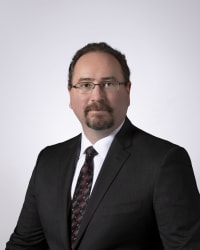
Brian K. Steadman
Top rated Estate Planning & Probate lawyer Solomon Dwiggins Freer & Steadman, LTD. Las Vegas, NV

Helpful links
Other featured articles

William Toles’ professionalism has brought him honors and built his reputation

How to handle overdue customer accounts

The pitfalls of starting an enterprise with friends and family
Find top lawyers with confidence
The Super Lawyers patented selection process is peer influenced and research driven, selecting the top 5% of attorneys to the Super Lawyers lists each year. We know lawyers and make it easy to connect with them.
Find a lawyer near you