


For the Public Good
Five of Chicago’s top litigators put the “pro” in pro bono
Published in 2007 Illinois Super Lawyers magazine
By Toni Klym McLellan on February 1, 2007
Nobody has to twist the arms of these five attorneys to help others. Even if it means working long hours for no pay, the way pro bono work makes them feel makes the sacrifice no sacrifice at all.
Terri Mascherin—Advocate for a Fair Fight
Terri Mascherin jumped into law practice and pro bono work at Jenner & Block with equal aplomb. Initially mentored by more experienced partners at the firm, she spent years working on two death penalty cases (one sentence was reduced; the other, overturned).
Then, in what Mascherin calls “fortuitous timing,” former Gov. George Ryan declared a moratorium on executions in Illinois. This led to work defending some of the governor’s clemency orders. “There’s very little litigation over the clemency power, because it’s one of the few powers the governor has that nobody can challenge,” she says. “So we were going back to cases that dated to the period of the Articles of Confederation out of Massachusetts related to the king’s abuse of power.” The Illinois Supreme Court issued a unanimous opinion upholding all the clemency orders.
Now a partner and chair of the American Bar Association’s Death Penalty Representation Project, Mascherin also drafted ABA guidelines for effective representation of inmates on death row. “The Supreme Court has cited those guidelines as the standards against which counsel’s conduct should be measured,” she says. “It’s been incredibly rewarding. I’ve been practicing for 22 years, and I can’t imagine that I’ll ever equal the feeling of having a jury come back and say, ‘We’re not going to sentence your client to death.’”
Ray Rezner—Planting Positive Seeds in the Community
Raised in a small town in Iowa, thoroughly Midwestern Ray Rezner isn’t one to brag, and his friends know it. The year he was first nominated to be included in Super Lawyers® magazine, colleagues presented him with an honorary Superman costume. As head of litigation at Barack, Ferrazzano, Kirschbaum, Perlman & Nagelberg, Rezner feels he doesn’t deserve accolades given to attorneys who fight for truth, justice and the American way. But as administrator of the firm’s pro bono group, Rezner makes it possible for his colleagues to contribute in a meaningful way. “It’s solely volunteer, but we’ve tried to encourage it by giving them credit toward billable hours,” he says.
Rezner also formed the firm’s Diversity Committee. “One of the things we tried to do is look inside the community and see how we could be of assistance,” says Rezner. The committee formed the BFKPN Charitable Foundation, which began working with Sharon Christa McAuliffe Elementary School in Chicago’s Humboldt Park neighborhood. The foundation supports projects, including school-supply drives, tutoring and career-day presentations, and Rezner says attendance during the first week of school rose from 50 to 97 percent. “To me, the real motivation for volunteering isn’t an impact on the business side of things,” he says. “You just feel good about giving back.”
Kimball Anderson—Making Pro Bono Personal
The chair of the Pro Bono Committee at Winston and Strawn is in that position for a reason. Kimball Anderson, who received the 2003 Pro Bono Publico Award from the American Bar Association, has thoroughly interwoven commercial practice with contributing to the good of his community. Even one of Winston & Strawn’s paralegals has Anderson to thank for his freedom. Anderson filed a federal habeas corpus petition that secured the release of Ken Berry after he served eight years in prison, and Berry went on to join the firm as a paralegal.
While Anderson, who also serves as president of the Chicago Bar Foundation, has argued before the U.S. Supreme Court, his passion seems to lie closer to the ground. The son of a nurse and a social worker, he cites a case where he helped secure a divorce for a homeless woman living in her car with her young daughter. “Divorce was the least of her problems at the time,” says Anderson, who committed to helping the family gain some stability. He secured housing by working with local landlords and registered the daughter in high school. She went on to attend DePaul University by obtaining student loans that Anderson himself guaranteed. “I’m proud to say she’s a freshman law student at Washburn University in Kansas,” he says.
Laurel G. Bellows—Advocate for the Rule of Law
As chair-elect of the American Bar Association’s House of Delegates, Laurel G. Bellows, a principal with Bellows and Bellows, infuses the position with vigor and passion. “It’s my firm belief that in these troubled times, as the voice of the legal profession, the organized bar must restore confidence in American institutions by preserving the rule of law,” she says. This month a revamped Model Code of Judicial Conduct comes before the House of Delegates. This issue Model Code provides, among other things, fundraising parameters for judges, an issue that “affects the very core of judicial independence.”
That position takes about a third of her time, but Bellows is used to it. The former president of the Chicago Bar Association and founder of the CBA’s Alliance for Women knows how to combine optimism with efficacy. “My real belief is that individuals can change the world,” she says. “I’m one of those lucky people who is passionate about the practice of law and who has the gift of being able to work with those equally passionate to effect change and speak out on behalf of those who are vulnerable.”
Michael Chu—The Accidental Philanthropist
“I think lawyers have a responsibility to help the community. Someone once told me that surgeons are doctors of the body and lawyers are the doctors of society,” says Michael Chu, an intellectual property and patent attorney with Brinks, Hofer, Gilson & Lione.
Chu came to this realization through, of all things, boredom. While stretching his legs during a Continuing Legal Education conference, Chu poked his head into a seminar on civil rights and hate crimes. “It was fascinating, because it was an area I’d never touched upon in my practice,” says Chu. “There were these amazing prosecutors, defense attorneys and community-service people all discussing the things happening every day to Asian-Americans and other people of color around the country. I felt the least I could do was listen.”
That listening sparked involvement, as Chu began working with local and national Asian-American bar associations. In 2004, members of the National Asian Pacific American Bar Association (NAPABA) elected him president. Chu and the NAPABA vigorously lobbied the federal government to increase what he calls the “woefully low” number of Asian-Americans in the judiciary, “We’ve been doing that year after year,” he says, “and I think they’re starting to listen.”
Search attorney feature articles
Featured lawyers


Michael P. Chu
Top rated Intellectual Property Litigation lawyer McDermott Will & Schulte LLP Chicago, IL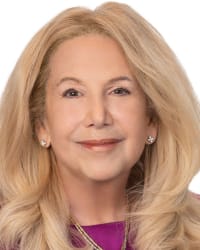
Helpful links
Other featured articles

A shorter, simpler contract doesn’t always mean a happier party

Tips on discrimination laws in the workplace

What to do if you’re injured by something you purchased
Find top lawyers with confidence
The Super Lawyers patented selection process is peer influenced and research driven, selecting the top 5% of attorneys to the Super Lawyers lists each year. We know lawyers and make it easy to connect with them.
Find a lawyer near you