


The Primary Obligation
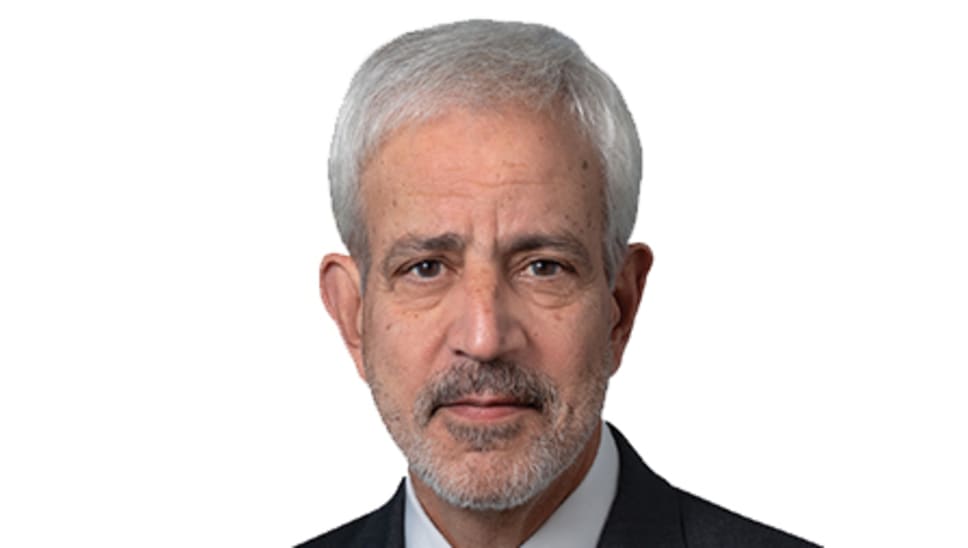
Prosecutor-turned-defense lawyer Sergio Acosta knows what the other side is thinking
Published in 2026 Illinois Super Lawyers magazine
By Nancy Henderson on January 16, 2026
During the first hour of the first day of Sergio Acosta’s first job after law school in 1985, Janet Reno, then state attorney for Miami-Dade County, addressed two dozen new assistant state attorneys in Florida. “One of the things that stuck most with me,” Acosta recalls, “was that she said, ‘Our primary obligation as a prosecutor is not to make sure that every guilty person goes to jail. It’s to make sure that no innocent person goes to jail.’”
After earning his J.D. from George Washington University in Washington, D.C., Acosta was interested in public service—and gaining trial experience. What’s more, his dad, a doctor, had volunteered in disadvantaged communities in Chicago, opening Acosta’s eyes to pressing issues. “There was a lot going on in Miami at that time in terms of drugs, a big increase in violence,” Acosta says of his decision to join the state attorney’s office, where he handled homicide and sexual battery cases. “It was an exciting place to work.”
By 1990, Acosta was ready to take on more complex cases and raise a family back home in Chicago, where the U.S. attorney’s office was hiring. By then he had close to 40 jury trials under his belt—more than some of the senior attorneys, and certainly more than most assistants. During his next 18 years prosecuting cases at the U.S. District Court for the Northern District of Illinois as an assistant U.S. attorney and then chief of general crimes, Acosta oversaw hundreds of investigations and prosecutions for offenses ranging from racketeering and embezzlement to political corruption and terrorism. He also made it a point to share Reno’s advice with every lawyer he trained.
As the office’s criminal civil rights coordinator, Acosta led the team that indicted police commander Jon Burge, whom Acosta calls one of Chicago’s “most notorious bad actors. … He and people under his direction had been alleged for many years of brutally torturing confessions out of people they had detained. But nothing had ever been done about it other than a series of civil lawsuits.”

In the early 2000s, a state-appointed special prosecutor concluded that there was sufficient evidence of torture but that the statute of limitations had passed. After the report, however, Acosta and his team discovered that, while Burge had frequently taken the Fifth Amendment in depositions concerning allegations of physical torture, there was one instance in 2003 where he did not. “For some reason, Burge had, under oath in a federal civil lawsuit, denied any physical torture of anyone, ever,” Acosta says. “So we seized on that, because it was still within the five-year federal statute of limitations.”
Ultimately, Burge was convicted of obstruction of justice and perjury, and was sentenced to prison.
Craving a new challenge, Acosta left the U.S. attorney’s office in 2010 for Hinshaw & Culbertson, where he often served as lead trial counsel in white-collar criminal and regulatory matters. Eight years later, he joined Akerman, where he co-chairs the white-collar crime and government investigations practice. “I was apprehensive about switching sides like that,” he says. “But I quickly realized that I really liked my clients. By and large, these are good people. Some are completely innocent. Others are good people who just had a lapse in judgment, made a bad decision here or there. But it doesn’t mean that they are bad people.”
At Akerman, Acosta has represented corporate executives in Latin America, gaming companies in Illinois, and individuals accused of wrongdoing in regulatory, civil and criminal proceedings. His work as a federal prosecutor, he says, helped prepare him to conduct internal investigations, which account for a large part of his practice. It also gives Acosta a leg up on courtroom strategy. “I know what the other side is thinking and how they go about doing things, and it helps me to understand the weaknesses of the government’s case. Hopefully, that results in a good resolution for my client.”
Search attorney feature articles
Featured lawyers

Helpful links
Other featured articles

Remembering some who have passed on
How Felix Gavi Luna and company landed the state’s biggest jury award

How Brandon Hall went from selling medical devices to handling ERISA cases
Find top lawyers with confidence
The Super Lawyers patented selection process is peer influenced and research driven, selecting the top 5% of attorneys to the Super Lawyers lists each year. We know lawyers and make it easy to connect with them.
Find a lawyer near you