


‘I Was Always Going To Be a Lawyer’
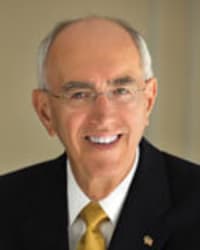
For decades, John A. Cirando has worked ‘the good, the bad and the ugly’ of appellate law

Published in 2026 Upstate New York Super Lawyers magazine
By Carlos Harrison on September 28, 2026
In the early ’90s, John A. Cirando found himself before the Appellate Division of the Supreme Court of the State of New York, arguing that the police had not tricked a 13-year-old into confessing. Because of a fluke in the docket, the very next case was also Cirando’s. Only, this time, he was contending that the police had tricked his client into a confession.
One of the second case’s judges interrupted, asking how the “trickery” Cirando was now opposing was any different from what he had defended moments earlier. Cirando hardly missed a beat: “It depends on where you’re standing,” he said, provoking laughter in the courtroom.
He laughs now, too, remembering the story. But, reflecting on his 17 years at the Onondaga County District Attorney’s Office and almost four decades now as a Syracuse-based appellate attorney, Cirando says he has always found his footing the same way. “I think what you do that makes it comfortable is the fact that you have a good understanding of the law, and how the law applies.”
Growing up, Cirando spent school-day afternoons at his father’s law office, watching, learning, and falling in love with the profession. “My mother sent me to the office so that I was out of her hair,” he says. “But I was always going to be a lawyer.”
He studied history at St. Bonaventure University, got his J.D. from SUNY Buffalo Law School, and served four years in the U.S. Army JAG Corps. In 1971, Cirando, then a captain, returned home to work as an assistant district attorney. “The DA’s office was the best place to go to serve the community and get a good background,” he says.
Early cases included welfare fraud, burglary, and an assault at a clambake. Less than two years after he joined the DA’s office, Cirando moved to appellate work—even though he says he never wanted to be a trial lawyer.
Cirando finds appellate cases enjoyable and intellectually challenging because it depends entirely on the record and set of facts presented at the earlier trial. “I call it the good, the bad and the ugly,” he says. “This is it, and we can’t change it. But, more importantly, they can’t change it. So you’re stuck with this background, and then that’s how you make your decision.”
The new role brought weightier matters: the murder of a hotel clerk during an armed robbery; and in a case that changed New York law, the murder of a 4-year-old by his parents. In the latter, Cirando successfully argued that, in introducing the parents’ history of abuse to the jury, the initial trial was not trying to inflame them—but to prove that the final, fatal injury was not accidental. The court of appeals upheld the guilty verdict, and the evidentiary doctrine later became known as “battered child syndrome.”
Another, the “buried bodies case,” tested the boundaries of attorney-client privilege. In 1973, a man confessed to his attorneys that he had murdered a teenager and two women, and told them where they could find the bodies. The attorneys went to the sites and photographed the remains, but kept quiet for several months. After the information came out, a grand jury indicted the lead attorney for violating New York’s laws regarding burials and reporting deaths. Cirando headed the appeal on behalf of the DA’s office after the county court dismissed the charges. The court of appeals affirmed the dismissal, indicating that the legislature should create a procedure where charges could be dismissed in the interest of justice, and what the court should consider. The moral question at the heart of the case led the New York State Bar Association to revise its confidentiality rule.
While at the DA’s office, Cirando was also working part time at his father’s firm. He did it for his father—who grew ill and died in 1976—and for the clients, many of whom Cirando had known since he was a child. “They had seen me grow up, a lot of these people,” he says.
In 1988, Cirando shifted full time to private practice, reestablishing his father’s firm in the same building it had been in. With his father’s initials in its name, D.J. and J.A. Cirando focuses on wills, estates and, of course, appeals.
All the while, Cirando has continued to set precedents. In one case, gambling on the St. Regis Mohawk Reservation forced the clear recognition of state jurisdiction on tribal land. In another, his arguments led to the establishment of the “Crosby remand,” whereby the appellate court asks the original criminal court judge to revisit a sentence imposed under federal guidelines.
Setting precedent, however, is secondary to Cirando’s primary goal: to serve the client.
“You may not prevail, but you’re doing the best you can for them,” he says. “Sometimes you ring the bell, and sometimes you don’t. But you don’t stop trying.”

Search attorney feature articles
Featured lawyers
Helpful links
Other featured articles

The ins and outs of subleasing an apartment

Sorting through firms from solo to massive

Nina Cortell helped pioneer appellate law in Texas
Find top lawyers with confidence
The Super Lawyers patented selection process is peer influenced and research driven, selecting the top 5% of attorneys to the Super Lawyers lists each year. We know lawyers and make it easy to connect with them.
Find a lawyer near you