


Her Story Is Theirs
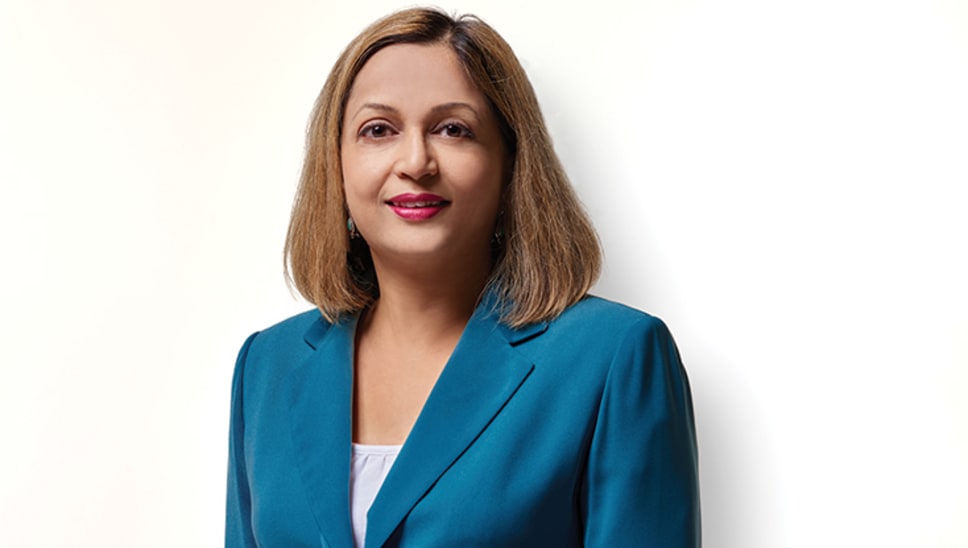
Duriya Dhinojwala came to the U.S. from India; now she helps other immigrants
Published in 2026 Ohio Super Lawyers magazine
By Carole Hawkins on December 12, 2025
In 1990, 21-year-old Duriya Dhinojwala stepped off a plane in Chicago. “I was the wife of a foreign student, and we had no money,” she says. “But I still had a feeling of belonging here.”
Today, Dhinojwala practices immigration and bankruptcy law as a partner at Brennan Manna & Diamond in Akron. Immigration is a niche here—only about 5% of Akron residents are foreign-born. But Dhinojwala’s immigrant status drew non-native clients from the start. They came because her story was theirs.
She grew up in Mumbai, India (Bombay at the time), and met and married her husband, Ali Dhinojwala, while they were students. She was at Sophia College; he was at Bombay’s Indian Institute of Technology—the Indian equivalent of MIT. After graduation, he was accepted into the Ph.D. program at Northwestern University in Evanston, Illinois.
“I think, out of his class of 30 students, they’ve all come to the U.S.,” Dhinojwala says. “The United States is the number one country in the world for higher education.”
A U.S. university education is also a common pathway for acquiring the coveted H-1B visa, sought by foreign workers with specialized skills. It’s the track Ali, now a professor of polymer science, would choose.
As a newcomer to the U.S., it took a while for Dhinojwala to learn mundane things like how to put coins in the basement washing machine. The couple didn’t have a car, and the two-block walk to the grocery store was brutal in the winter.
An even bigger obstacle: The visa that allowed her into the U.S. as a spouse also barred her from employment. Any career for Dhinojwala would be sidelined until her husband got his green card, which took about eight years.
“It wasn’t easy, but you deal with whatever situation you have,” Dhinojwala says.

As her husband accepted jobs in Champaign-Urbana, Illinois; then Evansville, Indiana; then Akron, she cared for their daughter Sarah. In 1998, she took the LSAT and was accepted into the Akron School of Law, welcoming their daughter Maria while in her second year.
“I felt I had to find my own path, versus just being a professor’s wife,” she says. “It’s how we H-4 visa holders [spouses] occupy ourselves: We go get another degree.”
Why law?
“The law gives you that opportunity to really understand how the mechanisms of a country works,” she explains. “By that time, I already felt like an American. America has been a very welcoming country, so I knew I belonged here. The next step was to learn the law, learn how to practice law. And I was the first lawyer in my family at the time. It was a new field, I like challenging stuff and I have thoroughly enjoyed the journey.”
Dhinojwala landed her first job at Akron’s Guy Lammert & Towne, a firm focused on bankruptcy and commercial litigation. But from the start, she also picked up foreign-born clients who needed someone to guide them through the maze of legal immigration.
“I come from the immigrant world; all my friends are immigrants,” she says. “You can name any type of visa and I can find you a person who’s on that visa.”
Several career steps later in 2016, Brennan Manna & Diamond hired Dhinojwala to grow its immigration and bankruptcy practices. Her volunteer work also expanded. Already a board member at Community Legal Aid, she partnered with the organization to start a neighborhood clinic to help underserved Ohioans deal with legal problems.
“There are individuals who do not know how to read English or understand simple documents,” Dhinojwala says. “Pro bono legal services can literally change someone’s life.”
In acknowledgement of all her volunteer work, the Ohio State Bar Foundation in 2021 honored Dhinojwala with its Elam Pro Bono Attorney Award.
Dhinojwala represents legally immigrated workers—but in today’s politically charged climate, she says, they can get painted with the same brush as undocumented ones.
For example, an executive order issued in the summer of 2025 as part of President Trump’s immigration crackdown—if upheld—would deny citizenship to children of undocumented workers. But children born while their parents are legally in the queue for a green card would also be denied citizenship, Dhinojwala says.
She adds that foreign students might think twice about studying in the U.S. following the administration’s actions to revoke, then reinstate, student visas without explanation in 2025.
“Those who follow the law should not be punished,” Dhinojwala says. “We do want those engineers, doctors and highly skilled workers, because we have a need for them in our labor force.”
Art Came First
Before she came to the U.S., Dhinojwala earned a fine arts degree and worked as a commercial artist in Bombay.
She moved in 1990—the year Adobe came out with Photoshop—and took a non-degree program at Chicago’s Art Institute to learn the software.
But ultimately, she decided to study law, not art.
“Really,” she says, “I’m a much better lawyer.”

Search attorney feature articles
Featured lawyers
Helpful links
Other featured articles

Monica Shah is driven to represent those facing down powerful institutions

Stephen Hilger excels at archery, music, photography and—oh, yeah—law

Josh Verde launched his career as a pilot, then touched down on a different path
Find top lawyers with confidence
The Super Lawyers patented selection process is peer influenced and research driven, selecting the top 5% of attorneys to the Super Lawyers lists each year. We know lawyers and make it easy to connect with them.
Find a lawyer near you