


Published in 2026 Virginia Super Lawyers magazine
By Amy White on April 17, 2026
There isn’t much that Elizabeth Gray hasn’t seen in a quarter century of practicing elder law and estate planning: fights over ashes, “evil children” stealing their parents’ money, people falling victim to catfishing scams, a secret cellphone hidden in a pizza box; and once, all-out warfare over a ceramic cow creamer. “I’ve seen tons of these things at Target,” says Gray, of McCandlish Lillard. “You put milk in it, and when you pour it into your coffee, the milk comes out of the mouth. All the kids wanted this silly thing.”
One thing this lawyer has never seen, though, is the inside of a law school classroom.
Gray was working as a paralegal in the ’80s for real estate attorney Neil Title when she decided she wasn’t going to pursue law. “I didn’t know I had ADHD then, but I had trouble concentrating in undergrad classes,” says Gray. “I’m also debt-averse, and at the time, it was like $80,000 for law school. I thought, ‘I’m not doing this.’” That’s when Title told her about the law reader program. Virginia is one of only four states that offers this alternate path to the law.
Instead of traditional law school, an aspiring Virginia law reader enters an apprenticeship, spending three years immersed in the study of law under the direct mentorship of a licensed, experienced Virginia attorney. The reader must dedicate a minimum of 25 hours to legal studies each week, with 18 or more of those hours physically spent at the attorney’s office, for at least 40 weeks every year. The lawyer-mentor must provide a minimum of three hours of personal discussion and instruction each week, guiding the reader through a curriculum covering the subjects taught in law schools, using materials and casebooks prescribed by the mentor and overseen by the Virginia Board of Bar Examiners. To ensure the program remains purely educational, the reader cannot receive compensation from the supervising attorney for work done around the office.
It was, in a word, “intense,” Gray says, laughing. “I had never heard of it before. It’s like the best-kept secret in Virginia. [The Board of Bar Examiners] doesn’t encourage people to do it; in fact, they discourage people from doing it. But if it was good enough for Thomas Jefferson, it was good enough for me.”
The hardest part was finding a lawyer willing to be her mentor. Title helped her find family law attorney Michele Rydell. “It was a learning process for both of us,” Gray says. “But it was an incredible path for me, because I learned how to teach myself.”

At the conclusion of her apprenticeship, Gray sat for the July bar exam. “I had never been in a convention center with so many people before, particularly after the very solitary law reader program,” she says. “I couldn’t move my jaw. I was frozen. I started to have a panic attack, so I forced myself to go to the ladies room. By the time I calmed down, I didn’t have time to finish.”
Six months later, she prepared by listening to relaxation tapes, then took the bar and passed. “Many people who go to law school don’t even pass on the first time,” says Title, of Karpoff & Title.
“You have to be absolutely on top of your game to get through the reader program, and now she’s an expert in what she does. I’ve referred a number of clients to her over the years because it means something for someone to read for the bar. I’ve only ever heard of two people doing this.”
Even so, law license in hand, Gray didn’t bother applying to big law firms. “I had a feeling they weren’t going to hire a law reader,” she says. Her first interview was at a small real estate and family law firm. “When I went in, the partner said, ‘Because you’re a law reader, you’re willing to roll up your sleeves and work,’” she says. “Being a reader got me the job.”
She quickly learned what she didn’t like: real estate, which she found boring, and family law, where she tired of contentiousness among lawyers in the practice area’s bar. “They weren’t very nice to each other,” she says. One day, a guardianship case walked in the door. She discovered she loved working with elderly clients. So she switched to an elder law boutique for a few years, followed by a couple of partnerships at small firms, then went solo for a bit before joining her current firm in 2016.
As she was building her elder law practice, she took one particular case that crystallized for her the role of a lawyer as advocate for those in crisis. The memory is inseparable from the date: Sept. 11, 2001. At the time, Gray’s law office was in Falls Church, Virginia, not far from the Pentagon, where American Airlines Flight 77 crashed after being hijacked, killing 64 people on the aircraft and 125 in the building.
“That morning—I’ve never seen vehicles go so fast,” Gray says. She had no idea what was happening, but the chaos outside was matched by a panicked phone call she received inside her office a few days later. A 24-year-old woman who was six months pregnant said her husband had reported to the Pentagon and never came home, and she didn’t know what to do. She told Gray it was just a matter of time before debt collectors started to call, and she was right. “She was hysterical,” she says. “I felt like I had to be a voice to say to these debtors, ‘You need to stop.’”
But the case deepened into a complex estate administration matter, revealing a common tragedy in cases of sudden, early death. The couple hadn’t been married long, and in the rush of life events, the husband never added his wife to his benefits. His life insurance policy still listed his parents as the beneficiaries. The parents’ grief translated into a difficult legal position. Gray recalls their heartbreaking justification: “If it meant that much to him, he would’ve changed it, so that money’s ours.”
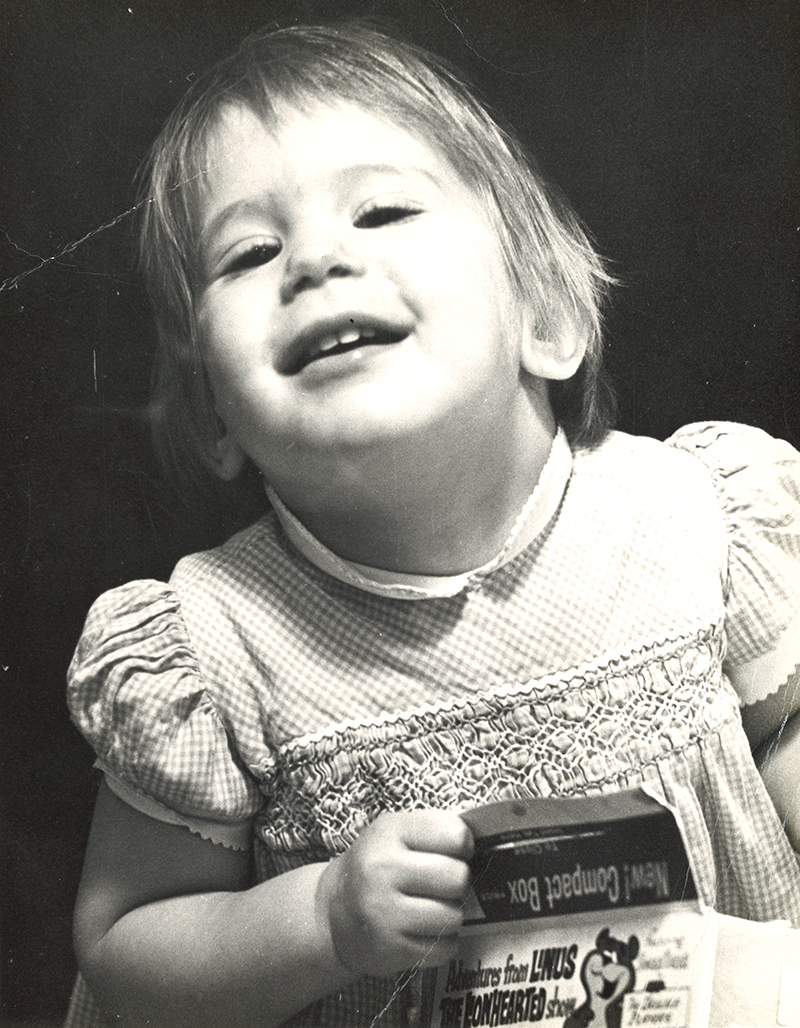
Gray advocated not just for the wife but for the unborn child. “Despite the initial hostility, these people wanted to know their granddaughter,” she says. They ultimately agreed to put the money in trust for their grandchild. “It was ugly for a while, but by the end, it makes you feel really good to have walked alongside someone after this life-changing thing happens,” says Gray. Her work on this case won her the Legal Assistance for Military Personnel Distinguished Service Award from the American Bar Association.
“She just gets things done,” says retired elder law and estate planning attorney Kathleen Cossa. “Whether that means within the bar, or going out into the community, she just makes things happen. But never in a pushy way. She’s modest, and very personable.”
Case in point: In 2003, Cossa was looking for an associate because her nephew was leaving the firm. “Word got around in the legal community that I needed someone, and of course, we women lawyers tend to stick together,” Cossa says. “So Liz called me up and said, ‘I heard that Michael might be leaving, and would you consider me?’ Now, if anyone else but Liz Gray had called me up and said, essentially, ‘Hey, I want Mike’s job,’ I’d have been very turned off. But Liz has such a way about her. I hired her, and she was quickly made partner.”
Cossa was fascinated by how Gray’s stick-to-it-iveness contrasted with her gentle nature. “She’s quite small, warm and unassuming, so you wouldn’t necessarily look at her and imagine the uphill battle required to have been a law reader—I don’t think I could have ever done that—but also the nature to deal with some really tough stuff in the practice. She deserves a lot of credit.”
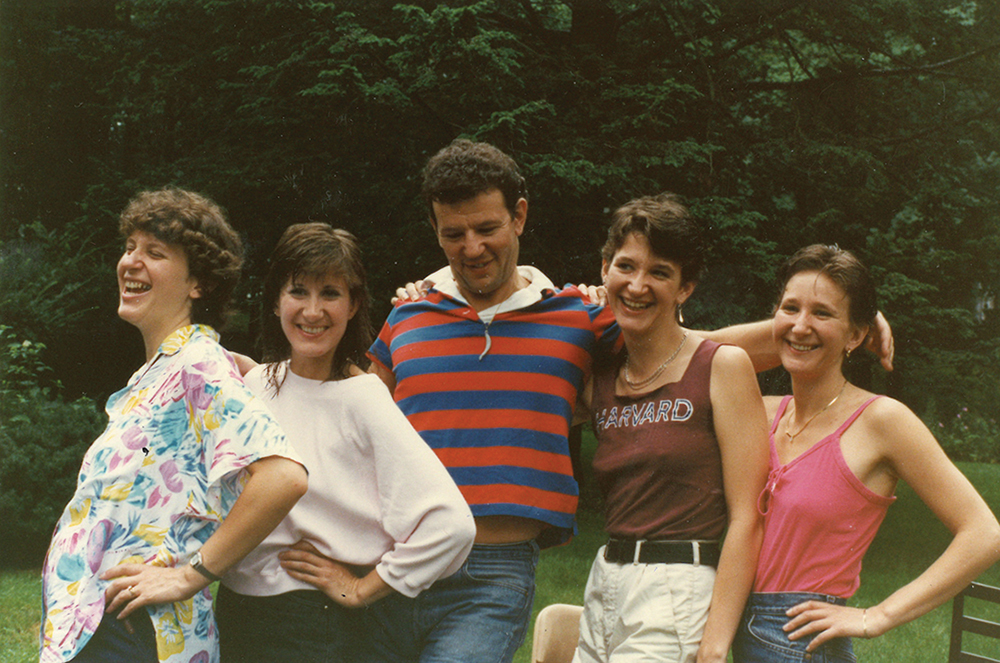
Gray says she’s seen her share of “the worst” over the years—like the scenario of the child who manipulates a parent into leaving everything to them, locking out other siblings. In these cases, Gray represents the “good” kids who are trying to get their parent into a guardianship. Most troubling lately is the rise of AI and catfishing. “We’ve been seeing a lot of romance scams and AI stuff,” she says. “The elderly person in question believes this person who has been calling them or who they’ve seen on Facebook is going to marry them. They have no idea it’s all fake.
“Part of the work is heartbreaking,” she adds, “because you really see the worst in people. But the rest of it is so fascinating. I like hearing the stories from my clients about who they are and the stories of their lives and of their families. And I like that, in elder law, we get along. Even if we’re battling in a contested guardianship, we still go out to lunch.”
There is one commonality to her work, Gray says, even when clients don’t want to admit it: “It is always about the money,” she says. “I laugh when clients say it’s not. Of course it is! And we have to deal with it before they die, and then after they die when children fight over tangible personal property or inheritances. When I meet with clients to do their estate planning, I always ask, ‘Are your children going to fight over anything?’ They’ll say, ‘Yeah, but they’ll work it out.’ Oh, no, they won’t. I’ve seen seven children fighting over one wedding ring.”
When she’s in the middle of the fray, Gray often thinks of her own experience in such matters.
When she was 21, her mother was killed in a car accident. After her death, Gray went to her home in search of a vase she had bought her mother. “I was like, ‘I have to have the vase,’” she says. “I put so much emotion into this thing.” She found it, but years later, her cat, in a chaotic burst of energy, knocked it over, splintering it. “I cried and cried,” Gray says. “I picked up all the pieces and threw them in the garbage and left the house. I just had to walk.” When she returned, her now-husband Avi had gathered up the shards and glued them back together. “It was so misshapen and couldn’t hold water, and after a week or so, I thought, ‘Why am I keeping this? It was ugly to begin with. It’s just ‘stuff.’” She shares this anecdote with clients. Does it work? “Not often,” she says, laughing.

Gray is on a crusade to reverse what she says are dwindling numbers of lawyers who want to practice elder law. “It’s not glamorous,” she says. “I think people don’t understand what it entails, and I think they are afraid of elderly people. They remind them of their mortality, and they’re not ready to deal with it.”
She gets it. There are times when she has to go to the hospital because a client is not going to live long and needs to sign a will right away. There is nothing easy about that, she admits. But the families are always so grateful and loving. “It’s emotionally rewarding work to meet people that you would never have met before, and to learn of yourself that you can behave gracefully under dire circumstances,” she says.
Although most of her work deals with winding down people’s affairs, she has a niche emphasizing the future—securing the lives of individuals with disabilities. Gray’s focus on special needs trusts asks, “When mom and dad are gone, who’s going to make sure someone is there to advocate for this person and protect them?”
Gray remembers the moment she first thought of the fate of her nephew, Alex, who has high-functioning autism: “How are we going to protect Alex when my sister and brother-in-law die?” Her typical special-needs trust clients are parents in their 50s or 60s who realize they are unprepared to offer care for their special-needs child after they die. “There’s no book that tells anybody how to do this,” she says. “There’s a real art to drafting these trusts.”
Special needs is the work she finds most fulfilling, and the area where she wants to deepen her focus. There’s also an interesting learning curve that feeds her intellectual curiosity—she has to drill down and understand various medical conditions and what they entail. Thanks to her work in this area, she’s a member of the invitation-only national Special Needs Alliance. “This kind of work is an interesting puzzle for me to figure out,” she says, “and at the end of the puzzle, there’s a life to protect.”
Gutting the Catfish
Catfishing scams typically target isolated elderly people, and begin with texts or phone calls. The next thing you know, Gray says, an otherwise rational person is giving away half their wealth. “The person is perfectly normal in every other way except when it comes to understanding what a romance scam is,” she says. “They are capable of handling their own checkbook, yet they’re giving $500,000 to somebody because they want to borrow some money before they get married. I don’t understand that disconnect.” In one case, Gray’s client took his father’s cellphone away because he kept sending money to his scammer, so the scammer delivered a pizza to the man’s home with a new cellphone in the box.
A win in a case like this is to protect the client from further scamming. “Sometimes they’ve given away so much money, they can’t afford to stay at home any more, and so they have to go prematurely to a facility and qualify for benefits,” says Gray. “It’s a win if I can get any money back or stop the hemorrhaging, and particularly if I can get the family re-involved with this person so that it doesn’t happen again.”

Search attorney feature articles
Featured lawyers

Helpful links
Other featured articles

The consequences of cannabis DUIs

What to know before entering into one of life’s most important relationships

Employee rights and protections under California’s robust employment law
Find top lawyers with confidence
The Super Lawyers patented selection process is peer influenced and research driven, selecting the top 5% of attorneys to the Super Lawyers lists each year. We know lawyers and make it easy to connect with them.
Find a lawyer near you