


Who Is Responsible When a Neighbor’s Tree Falls on My Yard?
By Judy Malmon, J.D. | Reviewed by John Devendorf, Esq., Canaan Suitt, J.D. | Last updated on March 5, 2026Whether urban or rural, mountainous or coastal, trees are an essential part of our landscape. There is a rich biodiversity of tree life, including majestic redwoods, pines, oaks, maples, and palm trees. Under property law, most trees belong to the owner of the land where they grow.
When a tree falls and hurts someone, there is an entire body of law laying out who is responsible. Many property owners have trees and should understand some basics about tree law. For legal advice after a fallen tree accident, reach out to a real estate lawyer.
How Do You Determine Who Owns a Tree?
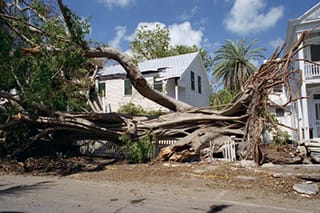
When property owners aren’t the ones who planted trees and need to determine who is responsible for them, the primary question in most states is where the tree trunk stands.
If the trunk is wholly on one person’s property, it is that person’s tree. If the trunk straddles the property line (even if it has grown that way after starting out entirely on one side), then the tree is shared.
Neither neighbor is permitted to take action to trim, treat, or cut down the tree without the other’s consent. Both homeowners are also responsible for the tree.

Have Real Estate Questions?
Whether you are looking to buy or sell or you're in a dispute, top real estate lawyers in the Super Lawyers directory can protect your rights and interests.
Are Property Owners Responsible for Tree Damage?
An owner is responsible for ensuring that a tree, including its limbs and roots, is not at risk of causing any damage. However, because trees grow not only up but out, it is common for tree branches to overhang abutting property. Tree roots can also grow onto a neighbor’s yard.
Historically, the rule was that if any part of your neighbor’s tree crossed onto your property, you were entitled to trim the tree up to the property line. This is still the underlying law. However, in many states, case law has imposed limits on how much the non-owner can trim.
You Can’t Harm a Tree By Trimming It
For example, in a 1994 California case, Booska v. Patel, a court added a requirement to the tree-trimming rule that a neighbor not act unreasonably or cause harm to the tree.
In that case, a tree’s roots had grown to the point of buckling the neighboring sidewalk. When the neighbor brought in a contractor to trim the offending roots, the contractor severed the root system along his entire property line, to the point that the tree became unstable and unable to survive.
The court determined that a neighbor’s right to trim overhanging branches or extended roots was not absolute. The court must consider the consequences for each party.
You Can’t Trim Branches or Roots Past Your Property Line
Another limitation of this trimming rule is that the law allows for branches and roots to be trimmed up to the property line, but not over it.
Any removal or damage that traverses the boundary line without the owner’s consent, even if genuinely and reasonably believed to be correct, can make the trimming neighbor liable to the owner for damages two to three times the actual damages.
Further, even trimming that remains on the right side of the property line can give rise to the same liability if the tree is somehow damaged. Keep in mind that actual damages in a court case may include replacing a mature tree or compensating for its aesthetic value.
Clearly, it’s best to work things out with your neighbor so they can trim the tree. When you can’t work things out with your neighbor, hire a professional arborist who knows both trees and real estate rules.
You Can’t Go on a Neighbor’s Property and Trim Their Trees
While a neighbor is entitled to trim portions of the tree that extend into their own property, they may not go onto the adjoining property where the tree is located to either trim or cut down the tree.
Cutting down, harming, or killing a neighbor’s tree can result in criminal penalties and civil damages.
Who Is Liable for Fallen Trees?
Tree care includes maintaining its health, keeping it trimmed, and noting any dangers it poses. Failure to properly maintain a healthy tree that causes damage will give rise to the owner’s liability for the harm.
For example, a homeowner has a dead tree on their property and does nothing about it. A branch from the dead tree breaks off and lands on a car parked on the street. The owner of the tree is likely liable for the property damage caused by their failure to prune the tree limb.
Where a windstorm or earthquake causes a properly maintained tree to fall or lose a limb, the damage will be an act of God or an act of nature, and the owner will not be responsible. The line between these two may not always be clear. In this situation, the homeowner’s insurance company may have to pay for tree removal after their neighbor’s tree falls on their land.
Check your homeowner’s insurance policy to understand your insurance coverage for storm damage caused by falling trees or limbs.
Who Is Responsible for Objects That Fall from a Tree?
Things that fall from a tree, such as fruit, leaves, or shade, are not the responsibility of the tree owner but of the owner of the property onto which it falls.
Parts of the tree, such as leaves, twigs, and dead branches, are considered natural debris and treated like any other material that falls or blows onto one’s property, even when they cause damage, such as clogged gutters. You are responsible for your own debris removal.
Do I Own Fruit from a Tree Overhanging My Property?
If your neighbor has a fruit tree that overhangs your property, the fruit on the tree belongs to your neighbor, even if it’s on your side. You need the tree owner’s consent to pick fruit.
If the fruit falls on the ground, claims may depend on the jurisdiction. In some states, any fruit falling from the tree on your side is all yours. In states like New York, the fruit is still the property of the tree owner.
Can My Neighbor’s Trees Block My View?
Some communities have local ordinances regarding blocking a neighbor’s view. One case interpreted a fence-height restriction to apply to a row of trees to avoid restricting their view. These are known as spite fence statutes.
In other states, spite fence laws do not apply to trees. This varies by jurisdiction and property restrictions. Check with an attorney to understand the rules that apply to your property.
Find Experienced Legal Help to Resolve Tree Disputes
A neighbor’s right to trim overhanging limbs or extending roots is not absolute. Rights and responsibilities depend on the individual situation. It’s best to work things out with neighbors. When self-help doesn’t work, hire a professional who knows both trees and boundary rules before taking legal action.
If you ever feel out on a limb about a tree issue, get legal advice from a real estate lawyer with experience in this area.
What do I do next?
Enter your location below to get connected with a qualified attorney today.Additional Real Estate articles
- What Is Real Estate Law?
- Joint Tenancy vs. Tenants in Common: What's the Difference?
- Can I Give Family and Friends a Home Mortgage Loan?
- What Does a Real Estate Attorney Do?
- What Laws Do Airbnb Hosts Need to Follow?
- How Long Does It Take To Get Adverse Possession in My State?
- Real Estate Contract Options in My State
- Tips for Navigating the Legal Risks of Becoming a Short-Term Rental Host
- How To Avoid a Fence Dispute in My State: FAQs
- Should I Consider a Short Sale?
- Getting Out of a Timeshare Can Be Tricky: Legal Pitfalls and Solutions
- Do You Have To Disclose if Your House Is Haunted? Stigmatized Property Laws
- Understanding the ROAD to Housing Act: Benefits, Rules, and Who Qualifies
- How To Deal With Squatters When Selling a Property
- Does Buying Property Abroad Give You Residency? Real Estate and Visa Rules
- Can You Sue Your HOA? Legal Options for Handling an HOA Dispute
- Can I Trim My Neighbor’s Trees Blocking My View? A Legal Guide
- Can You Get Out of a Timeshare Contract?
- Know What Is in Your Timeshare Contract
- Timeshare Scams: Recognize Fraud and Protect Your Rights
- Real Estate Ownership and Property Rights
State Real Estate articles
Related topics
At Super Lawyers, we know legal issues can be stressful and confusing. We are committed to providing you with reliable legal information in a way that is easy to understand. Our legal resources pages are created by experienced attorney writers and writers that specialize in legal content in consultation with the top attorneys that make our Super Lawyers lists. We strive to present information in a neutral and unbiased way, so that you can make informed decisions based on your legal circumstances.
Attorney directory searches
Helpful links
Find top lawyers with confidence
The Super Lawyers patented selection process is peer influenced and research driven, selecting the top 5% of attorneys to the Super Lawyers lists each year. We know lawyers and make it easy to connect with them.
Find a lawyer near you