


Airplane Mode
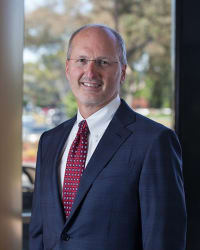
In life and law, Mike Danko is all in on flight

Published in 2026 Northern California Super Lawyers magazine
By Trevor Kupfer on June 26, 2026
After logging more than 5,000 hours in the cockpit over a span of 45 years, Mike Danko has learned a thing or two about flying. And one of those things is: You’ve either got the bug or you don’t.
“I definitely have it,” Danko says. “When you’re a kid and an airplane goes overhead, you look up and watch it going from one end to another, wondering what it’s like to be up there and what’s going on. You’re just drawn to it.”
The first time Danko was inside of a plane, during an era when an interested child could get a peek at the cockpit, “I just knew it was something I wanted to do,” he says. “I’ve always been fascinated by flight, from hang gliders in high school to now with jets.”
These days, Danko has a small jet of his own, plus a turbine helicopter and a P-51 Mustang—“a World War II fighter plane that’s 72% scale size of the original, an experimental aircraft that I built myself,” he says. But flying is more than a hobby: It’s also his livelihood. Danko has flown all over the country to investigate and litigate hundreds of cases—several of them involving airplane crashes—while notching multimillion-dollar results.

It started in 1980, when Danko got his pilot’s license while studying at the University of Virginia School of Law. “They had a wing of the Civil Air Patrol, and a fleet of really ratty old airplanes that you had to start by pulling on the propeller,” he says. “Our mission was search and rescue, but it was disbanded when they realized we lost more planes than we found.”
Upon getting his J.D., Danko had no thought of combining his two licenses. He started at a large firm defending banks before shifting to personal injury work alongside plaintiff attorney Terry O’Reilly. “I didn’t know it then, but he happened to be an internationally known aviation lawyer,” Danko says.
When O’Reilly realized his associate was a pilot, Danko’s career took off. Cases that seemed to be long shots came Danko’s way, and he managed to win a few.

“At a pretty young age, I was involved in some large aviation cases,” he says, citing the TWA Flight 800 explosion off of Long Island; the American Airlines crash over Jamaica Bay; and Air France Flight 4590 near Paris. “I started doing all of those by total happenstance. The idea that I could use my aviation background was really a gift and a surprise—not planned at all.”
Many of Danko’s airplane cases have involved equipment failure, but that’s where the similarities end. “It’s human nature to think, ‘This reminds me of this other case. It’s very similar,’” he says. “But it never is. When you really start pulling it apart, it’s totally unrelated.”
As a result, each lawsuit involves becoming an expert on a different part of an airplane. “I’ll believe I am the world’s foremost expert on this part right now,” Danko says. “It has no usefulness beyond this case, but because of the time you spent, the studying you’ve done, the people you’ve talked to, the tests you’ve run—I know more about this part or this assembly than even the people who designed it.”
That novelty is part of the appeal for Danko, who is especially interested in cases involving design flaws. Take the accident at Charles de Gaulle Airport in 2000, for example.
“The Air France Concorde was an engineering marvel, especially for its time. And the weak point on that aircraft was the tires,” he says. “Because of the speeds at which the aircraft rolled down the runway for takeoff and the weight of the aircraft, which generated a tremendous amount of heat, the tires just tended to blow. Because the fuel tanks were directly above the tires, an explosion would penetrate the fuel tanks, which is a very bad thing.”
So how did a case involving a French aircraft and airport, with mostly German passengers, come to an American lawyer? “No other country’s legal system really compensates people for noneconomic damages. And furthermore, in many other countries, you really can’t sue because contingency fee agreements are illegal.”
As a result, foreign attorneys often look for an angle to allow them to file suit in America. In this case, though many Concordes had French-made Michelin tires, this one used American-made Dunlop tires.
“Later, as it turned out, it wasn’t the tires,” Danko says, “because they ran over a razor-sharp piece of metal.” But that metal came from a Continental Airlines DC-10 that departed immediately before the Concorde. So Danko successfully represented the families of the flight crew in a lawsuit against Continental, arguing the piece had not been properly attached by maintenance 28 days before.

A crucial aspect of the work is making the complicated simple. “I’ll have a case, and through discovery I’ll get 50 boxes of engineering documents. And I go through page-by-page every single flight test, every single test of the part in question, and try to figure it all out,” says Danko. “By the time I get to trial, I feel I can explain it to anybody and they’ll understand why it’s wrong.”
Danko receives fewer overseas crash calls these days due to precedent regarding the forum non conveniens doctrine. But there’s another reason, too: “The rate of fatal aircraft disasters has dropped dramatically in the past 20 years,” he says, “which, like all aviation lawyers, I take credit for.”
Flight risks have yet to sway Danko away from flying himself. “Along the way, you have your share of adventures and emergencies,” he says. “I had a couple of engine failures, which do get your attention. I survived them and came out on the other side, I think, a better pilot.”
In one instance, the weather was so poor that visibility was zero when the engine failed, and Danko spiraled toward a valley below. The plane had a parachute, but he thought it better to trust the air traffic controller to guide him and his coasting craft toward a runway. Such close calls have a psychology not unlike litigation, according to Danko.
“When you have an emergency, the first thing that happens is your IQ gauge goes to zero, meaning it’s impossible to reason or think clearly—let alone creatively. Even the simplest task becomes very difficult. What you really have to rely on is training. Your response has to be automatic, by rote.”
Unsurprisingly, people regularly ask Danko about how his enjoyment of flying outweighs the risks involved.
“They say, ‘Well, I bet it’s because you know why planes crash, and you just avoid those things,’” he says. “I used to say, ‘Yeah, that’s it.’ But I realized, no. I have no reasonable explanation for why I fly. I guess it’s because I’m just so drawn to aviation.”
After all, he’s got the bug.
Search attorney feature articles
Featured lawyers
Helpful links
Other featured articles

What to do—and not to do—when your insurance claim is denied

When to consult a tax attorney instead of an accountant

When our online footprints outlive us, estate planning gets complicated—but you can help simplify it
Find top lawyers with confidence
The Super Lawyers patented selection process is peer influenced and research driven, selecting the top 5% of attorneys to the Super Lawyers lists each year. We know lawyers and make it easy to connect with them.
Find a lawyer near you