


Field of Dreams
When retirement plans go south, Charles Field gets busy
Published in 2026 San Diego Super Lawyers magazine
By Joe Mullich on March 16, 2026
Every morning, Charles Field rises at 5:30 to hike the local canyons so he can be at work by 9, scouring retirement plans for the kind of mismanagement he spent a quarter century helping companies avoid as in-house counsel.
Since starting his litigation career 10 years ago at age 60, Field, an employment benefits attorney at Sanford Heisler Sharp McKnight in San Diego, has recovered more than $150 million for more than one million plan participants. His landmark settlements—including $69 million against UnitedHealth and $61 million against General Electric—rank among the largest-ever in cases related to the Employee Retirement Income Security Act (ERISA), the federal law that governs retirement plan management. Rather than focus on excessive fees, he’s targeted poor investment performance.
“While fees may have an incremental impact, it’s bad investment options that truly rob employees of their retirement savings,” Field says.
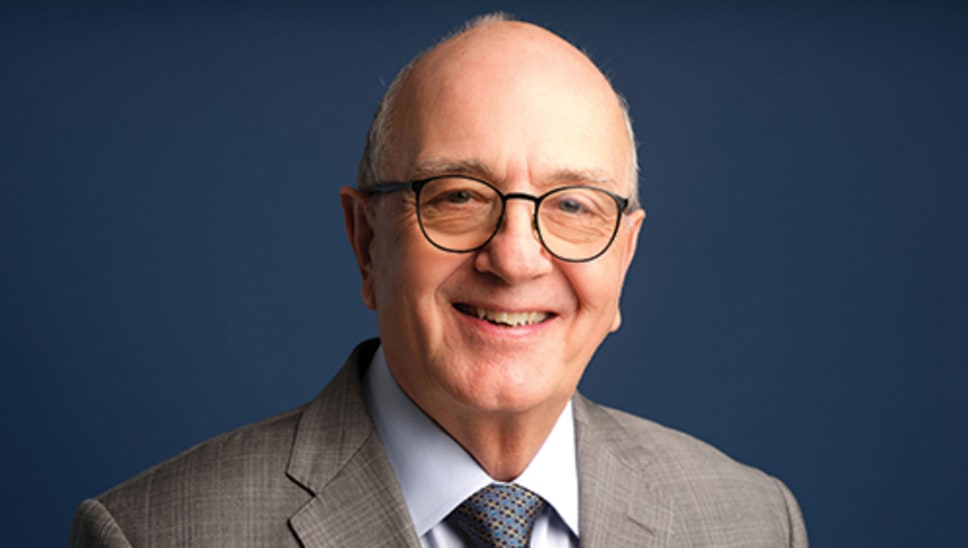
Wearing a suit coat without a tie, Field gives off a Warren Buffett vibe. He speaks in an unpretentious and curious manner and displays a playful sense of humor.
“He’s a very personable guy who people take an instant liking to,” says Keith M. Cochran, an attorney with Fitzgerald Knaier in San Diego, who has worked with Field on several cases. “Litigation can be contentious, but his calm tone and approach really help with opposing counsel.”

Field grew up in a small Indiana town, his mother a housekeeper, his father a machinist who built turbochargers for Indy race cars. Long fascinated by the stock market—particularly the 1929 crash—he began investing at an early age. “I thought, ‘Any dummy could do this,’” he says. “And then all of a sudden, a bad day hit and I lost it all.’”
The experience ignited a passion to understand how markets worked.
In 1982, he moved to California to attend McGeorge School of Law in Sacramento. He wanted to learn about financial markets and the weather was a bonus. “[In Indiana] we used to turn on the television on New Year’s and watch the Rose Bowl,” he says. “We were all huddled in our houses, freezing, and saw these people in Pasadena in shorts and sunglasses. I thought, ‘What am I doing here?’”
After earning his J.D. in 1986, Field spent a quarter century working for financial firms. For much of that time, he served as general counsel to investment advisors that managed the assets of cities and towns, pensions and endowments. He oversaw compliance for billions in investment funds—including the types of products that would later become central to his ERISA cases.
“A lot of lawyers need you to explain basic financial concepts,” says investment advisor Horacio Valeiras. “Charles really understands this stuff so he goes deeper. He would always figure out how to get something done.”
As he reached an age when most people contemplate retirement, Field decided to try something new: litigation. Launching Sanford Heisler’s ERISA practice in 2015 proved tougher than expected. “Litigation is very adversarial,” he explains. “People are there trying to make you look bad in front of a judge.”
But Field possessed something his opponents didn’t: an insider’s understanding of investment products. From his years sitting across from pension consultants, he knew that a fund underperforming for three years should be replaced. Yet he kept finding plans with funds that had underperformed for five, 10, 15 years.
Field’s first ERISA case alleged that an investment management company used its employee retirement plan as an “incubator” for new mutual funds, giving untested products to employees to build track records before selling them to outside investors. The $3 million settlement validated his approach.
The wins grew larger. Transamerica settled for $5.4 million. Walgreens paid $13.75 million. Then came the landmark cases that would reshape the industry.
In 2017, Field took on General Electric in an ERISA class-action suit on behalf of roughly 250,000 401(k) plan participants, alleging investment mismanagement. “GE makes jet engines, light bulbs, stuff like that,” Field says. “For some reason, they decided to get in the investment management business.”
GE created mutual funds and placed them in the employee retirement plan, with a provision stating that the funds could never be removed. Even as those funds consistently underperformed, GE earned millions in advisory fees. Eventually the company sold its investment business for $500 million. “Our argument was that GE built this business on the back of their employees, and the employees got the short end of the stick,” Field says. After six years of litigation, the case settled for $61 million, the largest amount ever for an ERISA case involving proprietary funds.
If GE exposed how companies profit off their workers, the UnitedHealth case revealed how personal ties can distort fiduciary judgment. Field alleged UnitedHealth’s executive leadership had intervened to keep poorly performing Wells Fargo target-date mutual funds in the plan to protect a lucrative business relationship with Wells Fargo.
During discovery, Field’s team uncovered a damning email: UnitedHealth’s CFO had called Wells Fargo, angry that the financial firm took its insurance business elsewhere after he had, per Field, “stepped in front of the freight train” to keep Wells Fargo’s funds in the UnitedHealth retirement plan.
The judge wrote in his opinion that UnitedHealth had been caught with “its hand in the cookie jar,” and the case settled in 2025 for $69 million—the largest single-plan ERISA settlement for failure to remove underperforming investments.
Field describes fiduciary duties as sacred. “It’s similar to the duty a parent owes to their child, or that a doctor owes to a patient,” he says.
That’s why he is currently pushing to get ERISA cases before juries rather than judges. “Juries are more sympathetic to the plight of workers who are trying to save for retirement,” he says.
Field has seven active cases against major corporations, including Southwest Airlines and Discount Tire. He’s also building a studio in his office to create YouTube videos to educate workers about their retirement rights. “Most people don’t really know that much about their 401(k) investment options,” he says.
His impact is already visible. “When I first started doing this 10 years ago, I came across a lot of plans that didn’t have good funds,” Field notes. “Now they’re doing a much better job. That’s satisfying to me, that your work is causing positive change.”
Fund administrators don’t always share that satisfaction from his work. Recently, a pension consultant conference accepted Field’s registration and payment, then abruptly uninvited him. “We don’t want somebody here who actively sues our clients,” they wrote.
Now 70, Field has no immediate retirement plans of his own. The practice consumes his life, leaving little room for much beyond his wife and two adult children, morning canyon hikes, and watching the market.
“I wake up every morning trying to find a way to make retirement better for people,” he says. “This is invigorating.”
Search attorney feature articles
Featured lawyers

Charles H. Field
Top rated Employee Benefits lawyer Sanford Heisler Sharp McKnight, LLP La Jolla, CAHelpful links
Other featured articles

Kimberley Best Robidoux on working employment-side immigration law in the first year of the second Trump administration

When you should protect your brainstorm with a patent, copyright or trademark

How the right lawyer can help you untangle life’s biggest problems
Find top lawyers with confidence
The Super Lawyers patented selection process is peer influenced and research driven, selecting the top 5% of attorneys to the Super Lawyers lists each year. We know lawyers and make it easy to connect with them.
Find a lawyer near you