


‘Very Real, But Not Always Fair’
War in Bosnia-Herzegovina and injustice in Detroit forged Aida Spahic into an advocate

Published in 2026 Michigan Super Lawyers magazine
By Jessica Glynn on August 17, 2026
Aida Spahic was 8 years old when she remembers the first bombs dropping in Mostar, the scenic city in Bosnia-Herzegovina’s Dinaric Alps, its iconic 16th century stone arch bridge stretching across the emerald Neretva River. During the following years in the early ’90s, she remembers: fighting to go to school, ushering her brothers downstairs when bomb sirens went off, giving a fake non-Muslim sounding name if a soldier approached, and walking in a zigzag pattern to make herself a difficult target for snipers. Even when her family escaped to the Hamtramck enclave of Detroit, adjusting to life with no common language or community was far from easy.
Now, as a criminal defense lawyer in Birmingham, Spahic shares how her experiences helped form the advocate she is now.
“When a client comes into my office, they are going through one of the worst times in their life,” Spahic says. “I understand that fear. I understand that uncertainty. I understand what it’s like to not have control. And I know what it’s like for people to assume things because of your accent, where you grew up or your religion.”

Spahic didn’t know her family was Muslim until a friend told her she couldn’t play with her anymore. Before the war, it had been a place where Catholics and Muslims lived together and mixed marriages were common. “It was not something that people really talked about openly, so I didn’t even realize my religion until the war started as ethnic cleansing and genocide was committed against the Bosnian Muslims. We looked the same, we spoke the same language. The only difference was religion ”
Her family stayed, hoping the war would end quickly. But violence escalated, and so did their vigilance. At night, they slept in layers with birth certificates and college degrees sewn into jeans, and jewelry stuffed into her mom’s hair scrunchy in case soldiers forced them to leave. Spahic heard the screams as soldiers raped women in a neighbor’s house. She would lay awake planning how she might protect her family and escape by jumping out her second-story window.
“We were lucky that my family survived,” she says. Spahic’s father, a professional soccer player, somehow arranged his family’s passage into Croatia via a team bus. “There were a lot of players and then just us. I think everybody assumed my mom was the wife of one of the coaches.”
Her dad stayed behind and was sent to a concentration camp while Spahic and her mom and brothers, ages 14 and 4, hid with a family in Croatia. They applied and were accepted to enter the United States as refugees, arriving in Hamtramck in September 1993. They were brought to a small upstairs apartment—far from what Spahic had pictured after seeing Beverly Hills, 90210. After traveling 5,000 miles, her mom stayed up the whole night cleaning because of its poor condition.
“We cried,” Spahic says. “We wanted to go back. I don’t know how my mom did it. She was a lawyer in Bosnia, and she came here alone with three small kids. We did not speak the language. You don’t know if your husband is going to make it out alive. She was only 36, and I’m 43 now, and I can’t even imagine. I always say if I could be half the woman that she is, I will be very proud of myself. My mom’s somebody that I definitely look up to, my dad as well. He went through a lot, and he sacrificed a lot to make sure that we made it out alive.”
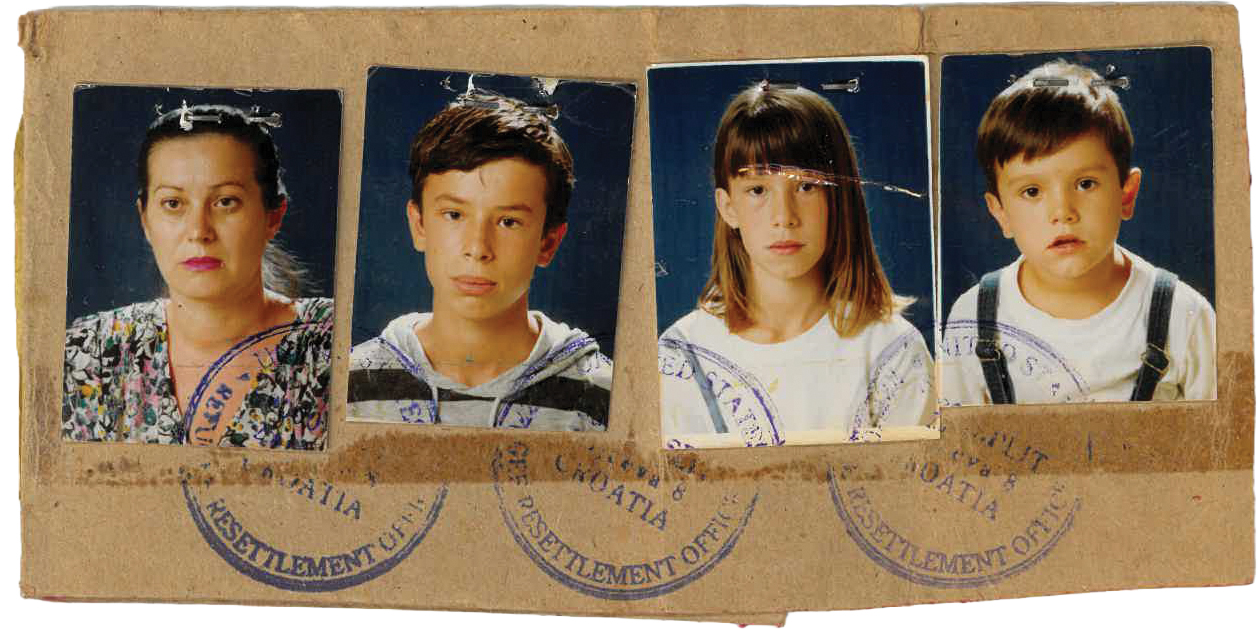
Her dad joined them in 1994, and though he didn’t speak about his six months in the camp, Spahic knew he was beaten and made to work while starving.
Spahic studied psychology and sociology at University of Michigan, and became a lawyer to be like her mom and make her parents proud. Her interest in criminal defense stems from the injustice she witnessed—both here and abroad.
“I experienced two different worlds: One was a war where there’s absolutely no system of justice, and then growing up in the Detroit area where the justice system is very real, but it’s not always fair, especially for certain communities,” she says. “It gave me a deep respect for the law, but also I know that it doesn’t always work the way that it should.”
After law school at Detroit Mercy, Spahic taught American law in France for a year and then returned to Michigan to work in criminal defense and then start her practice.
“The majority of my clients are really great people that have made some mistakes, and we’ve all made mistakes,” says Spahic, whose work often deals with assaults, license restorations, and drug- or alcohol-related crimes. Every case is personal, she adds, but the greatest successes are clients who call years later to say they’re still sober and doing well.
Nowadays, Spahic can’t help but empathize when she sees immigrants being judged unfairly. She recalls a recent conversation with a friend following news coverage of a child who had died in the ocean as his family tried to seek asylum in the U.S. The friend blamed the parents, saying they should go to prison. Spahic reminded her that her own family crossed the border illegally into Croatia.
“Had they caught us, they probably would have killed us, raped me and my mom and killed the Croatian guy that was helping us,” Spahic responded. “You have to understand that people make these very risky decisions because they have no other choice. Can you imagine how bad it is wherever they’re coming from?”
Since 2004, Spahic has returned to Bosnia almost every summer—including a trip a few years ago to see her father laid to rest in the homeland he loved so much. “It’s the only place where I can completely recharge and relax,” she says. “It’s the way of life. Everybody kind of moves at a slower pace; it forces me to relax. So I go to Bosnia—I always stay 30 days—I recharge, and I come back and do it all over again.”
Search attorney feature articles
Featured lawyers

Helpful links
Other featured articles

Eric Fong speaks for those otherwise invisible in the justice system

Missouri’s implied consent law and other DWI misconceptions for first-timers

Ofelia Calderón on why that mission has gotten harder
Find top lawyers with confidence
The Super Lawyers patented selection process is peer influenced and research driven, selecting the top 5% of attorneys to the Super Lawyers lists each year. We know lawyers and make it easy to connect with them.
Find a lawyer near you