


Published in 2026 Pennsylvania Super Lawyers magazine
By Jessica Glynn on May 20, 2026
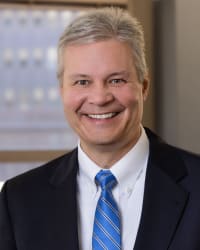
Aviation attorney Bob Williams was piloting a cross-country flight when the collision avoidance system in his plane alerted him that another aircraft was coming too close. “I said to myself, ‘Any time now, air traffic control will be giving me a warning. Where is it? Where is it? Where is it?’”
It never came.
As he broke through the clouds to approach the airport, he again knew there were other planes heading toward runways, and he again was given no warning beyond what his aircraft and eyes could tell him. It was a tense moment, but he was able to land safely.
Williams tells this story—which happened during the 2025 government shutdown when air traffic controllers were unpaid and understaffed—not as a cautionary tale, but to make another point.
“Did they not give me the warning? Did they not create additional separation? No, they didn’t do those things,” he says. “But the system is so robust, there are so many redundancies,
that an accident didn’t happen. There are so many fail-safes, so many backups that make aviation safe, that the system can afford minor deviations.”
Williams knows everything that can possibly go wrong in flight. The aviation defense attorney has spent nearly 30 years investigating all the mechanical and human errors that must compound in order to bring a crash case to his desk.
“You’re solving a mystery,” he says. “When you defend aviation industry participants in these cases, whether it’s a mechanic or an airline or manufacturer, it’s not enough to go into the courtroom and simply say, ‘We didn’t do it.’ Juries and judges want to know, ‘If you didn’t do it, what did?’ So the defendants in aviation cases unfortunately find themselves strapped with the additional burden of not just proving their lack of culpability but also finding the true answer to it. And it’s awesome that, in the course of that exercise, you’re producing information and knowledge that ends up rippling its way back into changes in procedures or technology or teaching. Even in the wake of a tragedy, you’re still producing things that make the entire industry better and stronger and safer.”
Williams loves to get out to a hangar and talk to people in the same line of work as his grandfather, who was an Air Force mechanic. He also loves to get up in the air, spending his flight hours transporting pets from kill to no-kill shelters for the nonprofit Pilots N Paws; flying veterans to access medical care as a Veterans Airlift Command pilot; taking young cadets on their first flights as a squadron commander for the Civil Air Patrol; and, more recently, shuttling his triplet sons to and from college in three different parts of the country.
His most famous aviation adversary is plaintiff’s attorney Arthur Alan Wolk, who makes it clear he does not have many nice things to say about defense lawyers. He makes an exception for Williams.
“He’s a decent guy and a skillful lawyer,” he says. “That’s a magical combination in my experience.”
He adds: “He’s an extremely formidable lawyer in the sense that he’s not only knowledgeable in the law, but he’s very driven to understand the facts and able to manipulate them under the law to favor the interest of his client. So he’s not easy; he’s not a pushover, but he won’t do anything deceitful, dishonest or underhanded. He doesn’t do anything just to make life miserable. I find him able to resolve matters, and the fact that he hasn’t generated enmity or distrust works favorably for his clients.”
Ronald Weaver, the owner of AVStar Fuel Systems, has been seeking Williams’ counsel for more than 15 years in cases that have either been dismissed or settled for amounts “you can stomach.”
“Some of these claims, they’re business killers,” Weaver says. “They could wipe you right out, so they’re not minor things. They’re very serious, and without good results, you can lose your company, and he understands that.
“He’s got firsthand experience of what that runway looks like, what the approach is going to be like, when you take off if there’s trees, at the end of the runway how much you’re going to have to really get up over it, and what the weather conditions mean for the aircraft and safety of that flight,” Weaver adds.
Tamer Ahmed, executive claims manager at Global Aerospace who has worked closely with Williams for 11 years on products liability matters involving helicopter engines, says Williams’ technical know-how allows him to explain issues to third parties and call out opposing lawyers when they try to throw out numbers and figures they don’t understand.
“Unless you have a deep technical knowledge, you wouldn’t be able to make that argument,” Ahmed says. “A lot of folks will read what the expert is saying and just repeat it, but they don’t understand it. When you actually understand the underlying issues, you put yourself in a better position.”
Ahmed adds that he has a “great heart.” Those are the exact words Williams uses to describe his idol.

As a kid growing up in Pittsburgh, Williams says it was his grandfather who sparked his interest in airplanes. John Sikina was an Air Force mechanic during World War II who spent 13 months as a prisoner of war in Germany after his B-17 was shot down. Before that, at the base where he was stationed in Italy, he would stuff dinner rolls in his shirt, then walk along the fence outside to sneak the bread to hungry children.
“He was a true hero and had such a great heart,” he says.
Even though Williams loved visiting him and getting to “touch the aircraft” at the Pittsburgh Air National Guard base, his own path toward flying wasn’t a direct one.
Williams was the first in his family to go to college. His father worked in retail, managing shoe stores, and his mother was a beautician.
“I always thought that I wanted to become a doctor,” Williams says. “In high school, I participated in science competitions and took all of the AP science classes. When I got to college, I guess I was a little burned out on the health sciences. I started to explore other classes.”
So much so that when it came time to apply to med schools, he didn’t have the right credits. Considering other paths, he began to think about his passion for arguing on behalf of others.
There was the time, for example, when he was in fourth grade at St. Malachy school and the teachers tried to cut recess by 10 minutes because they didn’t like how the boys were returning to class “all sweaty and disheveled.” The 10-year-old Williams stood up before his teacher and all his peers, presenting arguments to fight for their play time.
“You have these tidbits, these little events that occur throughout your life, and at the time, so many of them rarely feel significant,” he says.
He decided on law school at Temple University, where he met his wife, attorney Kelly Williams. After graduation, he worked briefly for a firm in Philadelphia before returning to Pittsburgh to start their family. When the triplets were babies, his life felt a bit like the movie Groundhog Day.
“I was fortunate enough to be able to take some paternity leave,” Williams says. “So what you would do is mix formula, three different bottles, feed them one after the other, change their diapers one after the other, put them down for a nap, go and mix more formula, and then one would wake up and it would start again. The most frequent question I’m asked is, ‘How did you do it?’ I didn’t have a choice. You just have to find a way.”
Later, he’d find ways to spend time with the boys in the air, bringing them along on his volunteer pet rescue missions; and in the water, becoming a starter and stroke-and-turn official for USA Swimming as a way to be closer to his two high school swimmers during long meets.
In 1998, only a few years into his career, Williams was working on commercial litigation cases at Pittsburgh’s Manion McDonough & Lucas when he got the plane crash case that would shape his practice.

The victims were a husband and wife who were flying their plane home to Philadelphia from a vacation in Orlando. The plane kept climbing on its own until it went into a spiral and crashed in a swamp. Williams was tasked with defending Chester County Aviation, which had provided mechanical services for the plane, against a lawsuit claiming the pressurization system had failed, which had led the occupants to pass out.
“What we believed happened, and I’m confident happened,” Williams says, “is an unfortunate sequence of events.”
His investigation indicated that the pilot had a medical emergency—a stroke or heart attack—while the autopilot was set to climb mode. The wife called in a mayday, and the commercial pilot who picked up the frequency told her to push down on the yoke because on his aircraft that would disengage the autopilot and stop the climb.
“But what he didn’t know, even though he was trying to be helpful, was on that particular autopilot model, whenever you pushed on the yoke, the autopilot interpreted that as a downdraft and tried to climb even harder,” Williams says. “So this poor woman was in a wrestling match with the yoke, and she eventually passed out. And we retained and worked with NASA flight surgeons who were able to tell us that she didn’t pass out because of pressurization loss. She passed out because she hyperventilated.”
The case was resolved amicably via confidential settlement. Despite the tragedy, Williams found it fascinating.
“I was hooked,” he says. “You had all of these things going on, different systems and air traffic control and aeromedicine. I had to go to aircraft hangars and talk to the mechanics who did the work. There’s a consciousness among those folks that they know how important their jobs are, so I still had the privilege of representing companies, but at the end of the day, I was really representing people who cared.”
In 2001, he obtained his pilot’s license and joined the aviation group at Schnader Harrison Segal & Lewis, which boasted multiple certified pilots. In 2023, their group moved to Victor Rane eight months before Schnader closed its doors.
“We saw the writing on the wall at Schnader that it was not long for the world, and we like each other, so we chose to stay together,” says Jonathan Stern, who has worked with Williams for all 25 of those years and co-leads their group.
Stern, who is based in Washington, D.C., and represents airlines, says they have worked together on some major cases, including one involving a helicopter crash arising out of power line work.
“He has an engineering mind,” Stern says. “He does very well with the technical experts, and he knows the area that we work in really well. He’s good at digging into the real deep details and using drawings and models to make things understandable for jurors.”
Sometimes he has to teach judges, too.
In a contentious 2015 trial in federal court, Williams was defending allegations of faulty maintenance leading to aircraft damage, but he had evidence to suggest that the owner of the plane might have known about the problem and tried to pin the blame on his client.
“Unfortunately, aviation cases are foreign language to 99% of judges, so I was examining a witness in that case and introduced one of the aircraft’s logbooks as an exhibit, and the judge interrupted and said, ‘Wait a minute, where did you get this logbook?’ The judge thought that we had broken into the aircraft and stolen private property without the owner’s consent. And that’s just not the way that aviation works. So the judge basically threatened to hold me in contempt of court and throw me in jail.”
After it was explained that the logbook was a part of the airplane, and his client was still in possession of the aircraft and had authorized possession of the aircraft and the included logbooks, the judge eventually apologized on the record. The case settled right before the verdict, which is not uncommon in Williams’ cases.
The strict confidentiality of those settlements prevents him from sharing details about some of the most famous cases he’s worked on, including the helicopter crash that killed Troy Gentry, and the B-17 that crashed on a sightseeing tour in Connecticut.
“In every case, regardless of who is at fault, at the end of the day, all too often people lost their lives, and you want to be respectful and mindful of that no matter the cost,” he says. “Every case that I work on teaches me another thing about how to be a good pilot.”

Williams has often been told by people he meets outside of the aviation industry that he’s crazy for flying propeller planes, such as his Piper Saratoga.
“They say if that little engine quits on you, you’re dead,” says Williams, before launching into an explanation of the engine’s two separate spark plugs on two separate ignition systems. “So you can lose an entire ignition system and the engine keeps on running.
“If you find yourself in a situation where you do lose the engine, the airplane doesn’t start falling out of the sky, it becomes a glider,” he adds. “A lot of the aircraft I fly generally have a ratio that they can glide for one mile for every thousand feet of altitude. And if you’ve ever looked at an aviation chart, you know if you’re 10,000 feet above the ground, the chances are good that you could glide to an airport.”
It’s that personal stake in how planes and their parts work that lends Williams his credibility.
“When I represent an aircraft manufacturer or an aircraft component manufacturer, I can say to them, ‘I’m not just your lawyer; I’m also your customer. You can trust me when I say I’ve got a real interest here in protecting your company and employees and product because I believe in them and trust my life to them every day.‘”

Search attorney feature articles
Featured lawyers
Helpful links
Other featured articles

Attorneys say being proactive is key

Three criminal defense attorneys weigh in

Atlanta lawyers offer advice on navigating internal investigations
Find top lawyers with confidence
The Super Lawyers patented selection process is peer influenced and research driven, selecting the top 5% of attorneys to the Super Lawyers lists each year. We know lawyers and make it easy to connect with them.
Find a lawyer near you