


About Beth Taylor
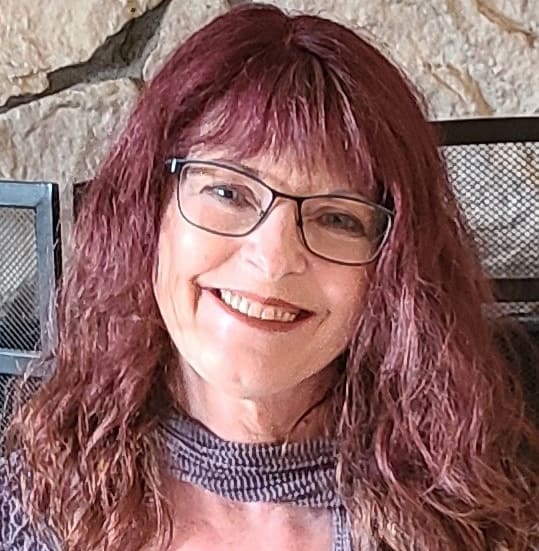
Beth Taylor was a senior editor for Super Lawyers for more than 20 years, and has won dozens of awards for headline-writing and editing throughout her career. Previously, she was an editor and covered courts for The Orlando Sentinel. She also worked for go2net and KIRO-TV in Seattle, where she wrote for and edited their websites. In addition, Beth edited The Kitsap Business Journal and Media Inc. Beth has written travel books, including Around Seattle With Kids for Fodor’s and Seattle Day By Day for Frommer’s, and online travel guides for Google. Her travel writing has appeared in publications including the Chicago Tribune and the San Francisco Chronicle. Beth has a B.A. in communications/journalism and a master’s degree in political science.
Articles written by Beth Taylor
The Real Lyon
Mesquite personal injury lawyer Ted Lyon has set his sights on the Koch brothers, the Texas prison system and, lately, on marauding packs of wolvesQ: Tell me about the roots of your work ethic. A: I grew up in East Texas, outside the town of Terrell, on a family farm, hunting and fishing, running through the woods. I had a really great high school education in a small town and a really great time growing up. There were eight kids in our family: a good Catholic family. We had cattle, we had sheep, we basically raised all our own meat. We had chickens and we had pigs. We had a big garden, a huge garden; and then we had a huge yard. We used …
Roads to Resolution
Victor Schachter on launching mediation centers in emerging democracies around the worldFifty years ago, Victor Schachter stood in the center of a dry, dusty village outside Bangalore, India, dressing wounds, applying ointment and dispensing medication to a dozen or so people waiting in line every morning. Today, as president of the Foundation for Sustainable Rule of Law Initiatives (FSRI), he offers a different kind of assistance. Schachter launched FSRI in 2012 to help create mediation centers in emerging democracies, including India, where cases now settle at the extraordinary …
Chaos Theory
How Kurt Melchior, who escaped Nazi Germany at 13, metamorphosed into a business litigatorQ: I understand you weren’t born in this country. A: I was a refugee. I’m Jewish, although I’m not an observing Jew. My family lived in Germany. One of my relatives once did some research and determined we’d been there 500 years at least. And then the Nazis came in. When [my dad] was in college in Germany, he had a fraternity brother, and the fraternity brother was gay. Years later, the fraternity brother was a dentist in a small town. He was also Jewish, and was in a gay relationship. …
The Good Foot Soldier
David Goodnight’s client list ranges from Amazon to Monsanto to a Napa Valley vineyard—and in his spare time, the Stoel Rives litigator helps Burundian widows rebuild their livesQ: What was it like growing up in the Seattle area? A: I spent a lot of time in the mountains and North Cascades hiking, and a lot of time in the outdoors kayaking. It was wonderful. My dad was disabled, so my uncle would take me up into the mountains, take me deer hunting, hiking, and was just very kind and generous. Q: And you’ve stayed put. A: I think the Bar, the King County Court, and our federal judges are wonderful. The Bar is relatively small and friendly. It's a comfortable …
Kay Wolf: It's the People
The Orlando employment defense attorney spends her spare time bringing educational opportunities to kids in CambodiaQ: What is the most difficult part of being an employment defense attorney? A: The hardest thing … is when a company is on hard times—and, of course, there’s been a lot of this in the last few years—and they have to lay off good employees. The issue of firing somebody that has not done their job, that’s pretty easy for me. [But]I went through a [client’s] layoff here locally, for example, with Lockheed Martin, back in the early ’90s. They went from 17,000 employees to about 3,500. …
How Taj Clayton Got Book-Smart and Street-Smart
The Fish & Richardson partner reflects on humble pie, hard work and comparisons to President ObamaQ: Were you born in Dallas? A: I’m from a small town outside of Philadelphia called Pottstown, Pennsylvania. It’s an industrial blue-collar town where my parents grew up, and I was there from birth until after my sophomore year in high school. It’s a small town, but it experiences some big-city problems: drug dealing and violence and crime. At the same time, it does still harbor some small-town values. There’s a great sense of community. But growing up in Pottstown, it can be a tough …
Larry R. Rogers Sr. on Personal (and Corporate) Responsibility
The Chicago attorney says everyone makes mistakes—but there’s a time for accountabilityQ: So why law? A: I’m the type of person who likes to see things done the right way, and I believe very much in our judicial system. I had taken a leave of absence [from law school] for health reasons. One of my current law partners [had] just finished law school. I met him at a gas station, we became friends and he encouraged me to go back. He [later] contacted me and said they had a position for a law clerk in the firm where he worked, so he suggested that I take the job. We’ve been …
The People-Pleaser
When everyone gets up from the table smiling, it’s a good day for Nashville transactional attorney Darlene MarshQ: Bankruptcy and environmental law—Is that an unusual combination? A: I only know a very few other lawyers who cross over into both of those areas. It came about sort of naturally, organically. I started out my practice in real estate, primarily commercial finance. That was in the late ‘80s and the early ‘90s, and we went through an economic downturn then as well—not as severe as the one we’re still pulling out of, but a fairly significant economic downturn. As a result of that, many …
Saving Mao’s Last Dancer
Charles C. Foster marshaled the force of the entire U.S. government to help a Chinese ballet artist who wanted to stay in HoustonQ: Tell me about a case you’ll never forget. A: I represented a banker from Libya, part of an economic class that Gadhafi wanted to get rid of or put in their place. The trial took place in a soccer stadium where he and a whole bevy of bankers and businessmen were let out, all chained together. They began to hang them, one by one, from a platform in the stadium. They were going to hang the rest of them the next day. My man somehow, that evening, through bribery and through hook and crook, …
Pioneer Spirit
Q: Why do so many judges end up becoming mediators? A: With the explosion of mediation, there was a large need for mediators in courts around the country, because almost every civil case today gets mediated. The natural people to be mediators were people who have been working in the judicial system all their lives; who, as part of their work, were trying to settle cases. I think it’s just a natural fi t. And it’s better than the [retired] judges sitting around all day watching Oprah and …
Find top lawyers with confidence
The Super Lawyers patented selection process is peer influenced and research driven, selecting the top 5% of attorneys to the Super Lawyers lists each year. We know lawyers and make it easy to connect with them.
Find a lawyer near you