


About Ross Pfund
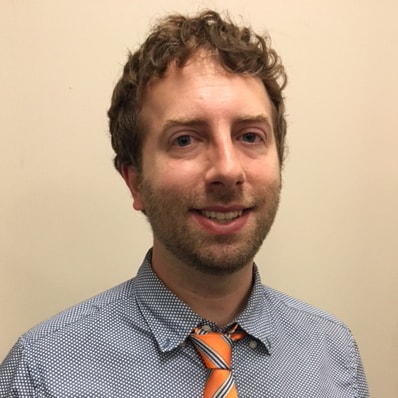
Ross Pfund is the managing editor of Super Lawyers. He is the editor of the Minnesota, Colorado, Massachusetts, Louisiana and Southwest magazines. An award-winning editor and writer with more than 20 years of experience, he has a journalism degree from the University of Minnesota. His work has also appeared in the Star Tribune and the Norman County Index. As a child, he knew he was cut out for a career in journalism because he never once stuck his hand into his father’s printing press.
Articles written by Ross Pfund
Looking Beyond Aqualung
Providence-based family law attorney Tim Conlon on computer crime in the ’80s, suing the Roman Catholic Church as a Catholic, and how society can help prevent institutional child abuseQ: Apparently you worked in computers during the early part of your career. A: It was in the mid-to-late ‘80s. I did computer crime prosecutions for a while. At the time, it had nothing to do with anything, although it ultimately turned out to be relatively useful in terms of the digital forensic work that I now do. Q: That had to have been on the leading edge of computer work. A: There was no computer crime unit in the Rhode Island State Police at that point. There were people doing …
The Persistence of Mary Anne Sedey
The St. Louis-based employment litigator speaks on pushing through discovery, her voir dire strategy and giving legal advice to Thurgood MarshallQ: Human Resource Executive magazine named you one of the top 10 plaintiff’s attorneys to fear the most. A: They did. Q: Seems like a dubious honor in their eyes. A: Great honor in mine. Q: What first got you interested in the law? A: I’m kind of a child of the ‘60s, and I was very involved in the women’s movement as a young woman, and I wanted work where I could do something about the status of women, and also make a living, and so I was very interested in the law. That …
Expecting the Unexpected
Duluth-based defense attorney David Keegan of Keegan Law Office on authenticity, courtroom surprises and representing the man who turned a recliner into a vehicleQ: What brought you to Duluth? A: I grew up in the Twin Cities area, and I went to William Mitchell College. A lot of the folks that I went to law school with at that time [were] second-career type folks. So I got a chance to bounce off a lot of people who had a lot more life experience, and that opened my eyes up to different areas of law. One of the people that I met there was originally from Duluth, and my younger brother had a lot of contacts in Duluth and I always liked the place …
Fast Track
Richard W. Hughes of Rothstein, Donatelli, Hughes, Dahlstrom, Schoenburg & Bienvenu in Santa Fe shares his thoughts on Indian law, the Peter MacDonald case, and getting a legal services job before he had his law degreeQ: What got you interested in the law? A: I was one of those totally naïve sorts who went to law school thinking, “Oh, I don’t want to really be a lawyer, I’d just like to have the background of the law degree and go into government or something.” I got to my third year and I was actually looking for a legal job; I was also in the midst of a little tussle with my draft board at the time for my suitability for military service. So I ended up sort of by accident taking a job on the …
From Bailiff to Bar
Trial lawyer Nathaniel Lee of Lee & Fairman on getting his foot in the door, President Barack Obama and the year he had 24 cases lined upQ: I understand you served on President Obama’s Presidential Advisory Board this year. A: For the last couple years, actually. It’s a citizen group where you don’t have any real power, but you get to meet with the president about three or four times a year. He’s got probably a dozen or so of these groups. … This president is probably the most inclusive president who has ever held the Oval Office. Q: What are your thoughts on the result of the last presidential election? A: My …
Fundamental Fairness
Trey McCowan of Kean Miller in Baton Rouge speaks on the role of the judicial system after natural disasters, the quality of Louisiana’s environmental litigators and working to improve the quality of representation for post-conviction cases.Q: Your firm and Liskow & Lewis recently won an award for teaming up to represent death row inmate Jimmy Ray Williams. How did you get involved? A: There was a gap in the law with respect to funding capital post-conviction cases—funding for lawyers, funding for experts. Another issue was just a lack of lawyers [taking these cases]. A lot of them were being handled by public defenders and an entity called the Capital Post-Conviction Project of Louisiana. We were approached in conjunction …
The Code of Law
Former computer programmer Michael A. Albert of Wolf, Greenfield & Sacks has developed one of Massachusetts' most significant IP litigation practicesQ: Before you went to law school at Harvard, you were an undergrad there. What did you study? A: My undergraduate degree was in philosophy, which allowed me to take courses in a number of different areas, ranging from math to linguistics to computer science. I actually worked as a computer programmer to pay my way through college. Law is like computer programming, in a way: It’s using a specialized language to solve real-world problems. Q: We don’t get to talk to a lot of …
Love of the Deal
Aleksandra “Aleks” Miziolek, the director of Dykema’s automotive industry group, follows the golden rule of transactional law: get the deal doneQ: How did you come to a practice in transactional law? A: I clerked two years for federal Judge James P. Churchill. I saw firsthand how little control you have over what you do [in a litigation practice]. There’s little predictability in that, not to say that a transactional practice is more predictable. The other thing that was very instrumental was that I found that transactional law is really a win-win. You’re sort of the quarterback for the client. You’re there when they have all …
Seeing How The Evidence Comes In
After 45 years as one of Duluth’s busiest—and most successful—trial lawyers, Tom Thibodeau still considers himself a studentOver the course of his nearly half-century career, Tom Thibodeau has defended Fortune 500 companies, represented plaintiffs in civil suits, litigated a Lake Superior shipwreck, and been involved in the legal fallout of one of Minnesota’s notorious murders. It sounds like he’s seen it all. But, even after working more than 100 civil jury trials, Thibodeau still considers himself a student. “Whether it’s medicine, engineering, product manufacturing, aviation crash cases … it’s been a …
Morrow in the Middle
Williamsburg-based mediator Joan Morrow, who practices across the country, speaks about fundamental neutrality, navigating emotional minefields and going from gladiator mode to counselor modeQ: What inspired you to go to law school? A: I’m a New Jersey native. I went to Cornell for undergraduate [school]. I met my husband, who was teaching as an adjunct professor in one of my senior English classes, and instead of moving to New York City, which is what I had intended to do, I married this man from Minnesota, found myself in Duluth and found my Cornell degree quite useless. Thank heavens I had taken a six-week typing course. So I typed my way through some jobs that year, but …
Find top lawyers with confidence
The Super Lawyers patented selection process is peer influenced and research driven, selecting the top 5% of attorneys to the Super Lawyers lists each year. We know lawyers and make it easy to connect with them.
Find a lawyer near you